
History of Scottish Women’s Aid – Campaigning to End Domestic Abuse in Scotland
The Origins of Women’s Aid in Scotland
Women’s Aid began in Scotland in the 1970s. Its roots were in the Women’s Liberation Movement (WLM), a feminist social movement which emerged in many countries around the world (including Scotland) during the late 1960s.
They campaigned on issues including equal pay, free childcare, financial and legal independence, an end to discrimination against lesbians, free and safe access to abortion, and many other issues. In doing so, they challenged the way women were viewed and talked about in society.
The WLM in Scotland first emerged in Edinburgh, Glasgow, St Andrews, Dundee, Aberdeen, and Lerwick.
They also set up a range of organisations and groups which last to this day, including Women’s Aid.
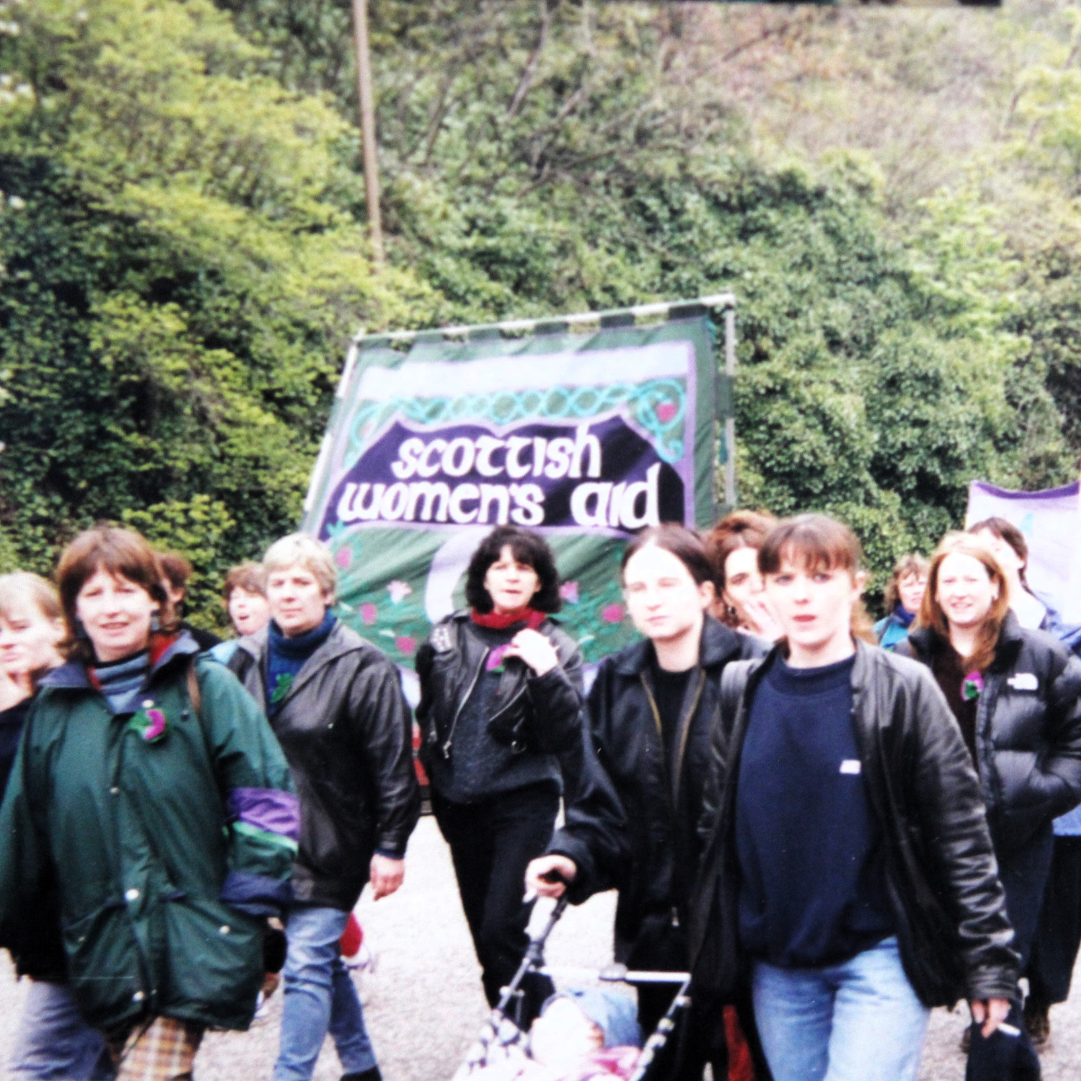
The First Women’s Aid Groups
For some WLM activists, focusing on tackling violence against women was a way to take practical action to challenge women’s inequality.
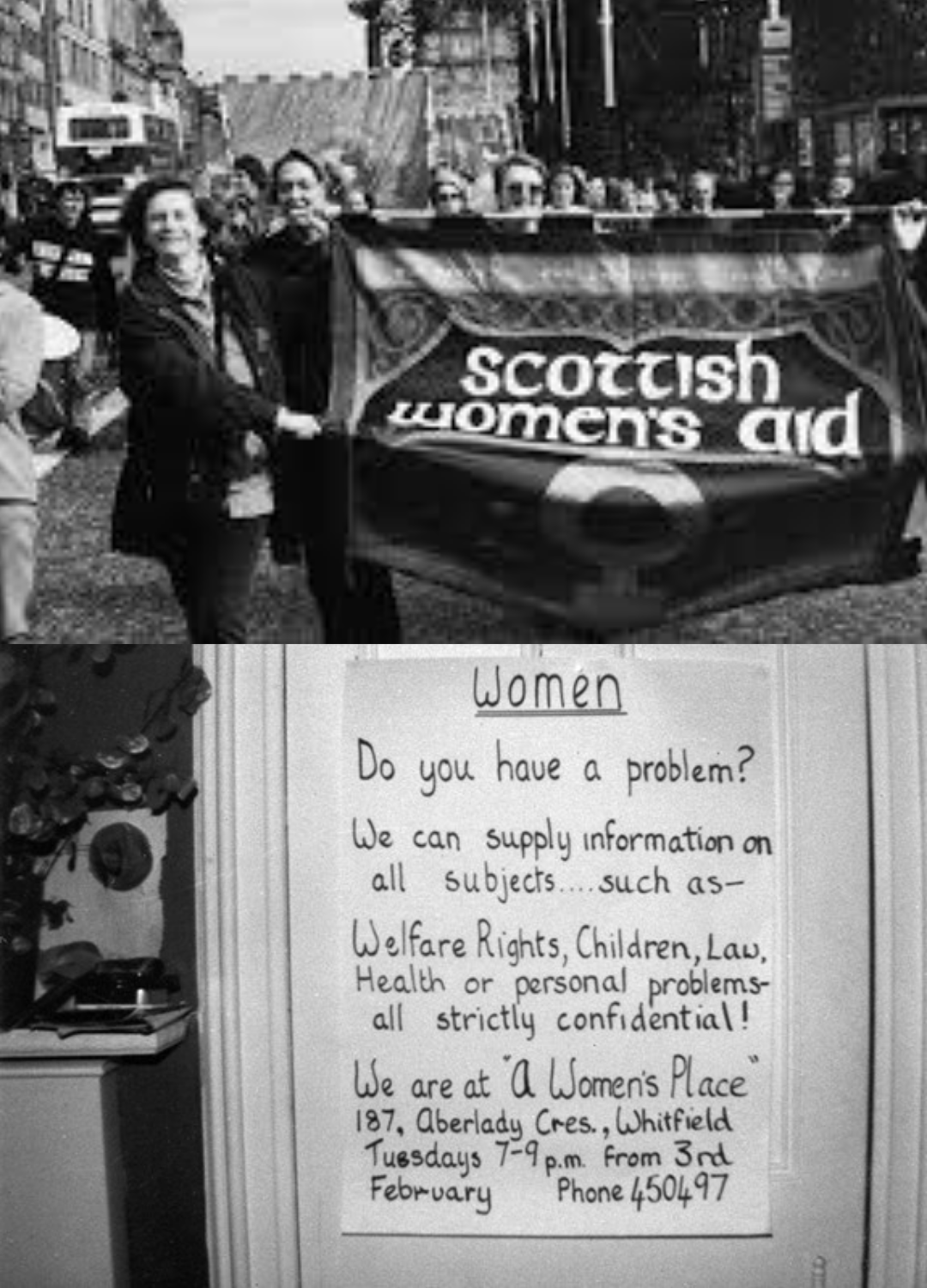
This resulted in the first Women’s Aid groups being established in Scotland in Glasgow and Edinburgh in 1973. This was soon followed by Women’s Aid groups in Dundee, Kirkcaldy and Perth.
In 1976, Scottish Women’s Aid was founded as a national organisation to coordinate and strengthen the growing network of Women’s Aid groups across Scotland
Alongside supporting the network, Scottish Women’s Aid has become the national voice of the movement, undertaking research, providing legal and policy expertise, influencing public policy and legislation, and campaigning to improve protections for women, children and young people affected by domestic abuse. Since its inception, it has played a leading role in shaping Scotland’s response to domestic abuse while advocating for lasting social and legal change.
Shaping Scotland’s Response to Domestic Abuse
This timeline highlights key milestones in Scotland’s response to domestic abuse. Many of these changes were shaped, informed or championed by Scottish Women’s Aid’s decades of advocacy, expertise and collective action.
1970s: Building the Movement
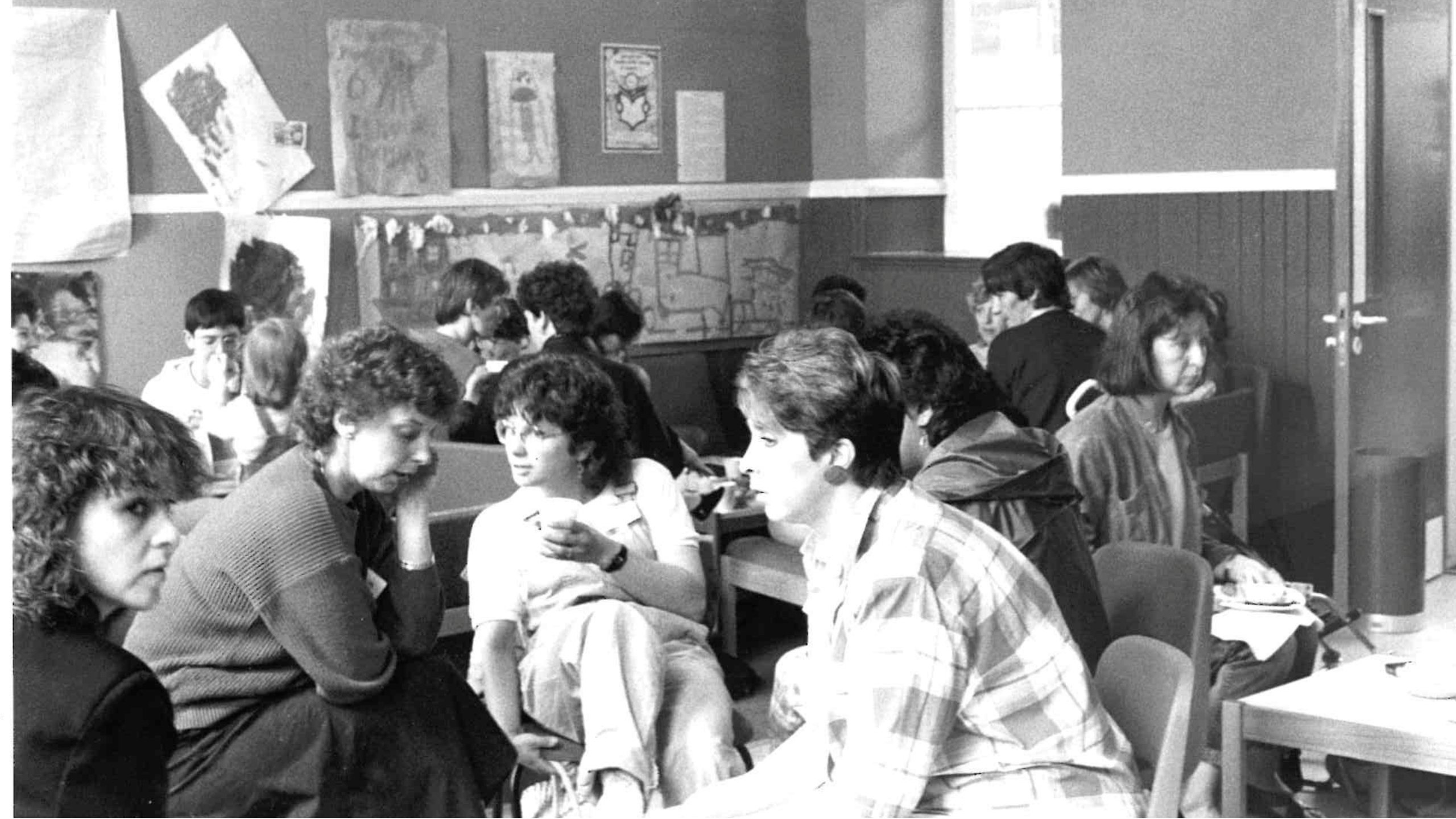
1976: Scottish Women’s Aid was founded as the national coordinating body for the growing network of local groups (initially seven: Edinburgh, Glasgow, Dundee, Kirkcaldy, Dunfermline, Falkirk, and Clackmannanshire).
By 1977: There were 15 refuges across Scotland. These were safe spaces created by women, for women and children, offering safety, solidarity and support at a time when domestic abuse was rarely acknowledged publicly.
1977: The Housing Act 1977 was implemented, recognising women and children experiencing domestic abuse as ‘homeless’ – giving them the right to state support and temporary accommodation. This was a landmark step forward in recognising domestic abuse as a housing and human rights issue and followed much lobbying by Scottish Women’s Aid and the wider Women’s Aid movement.
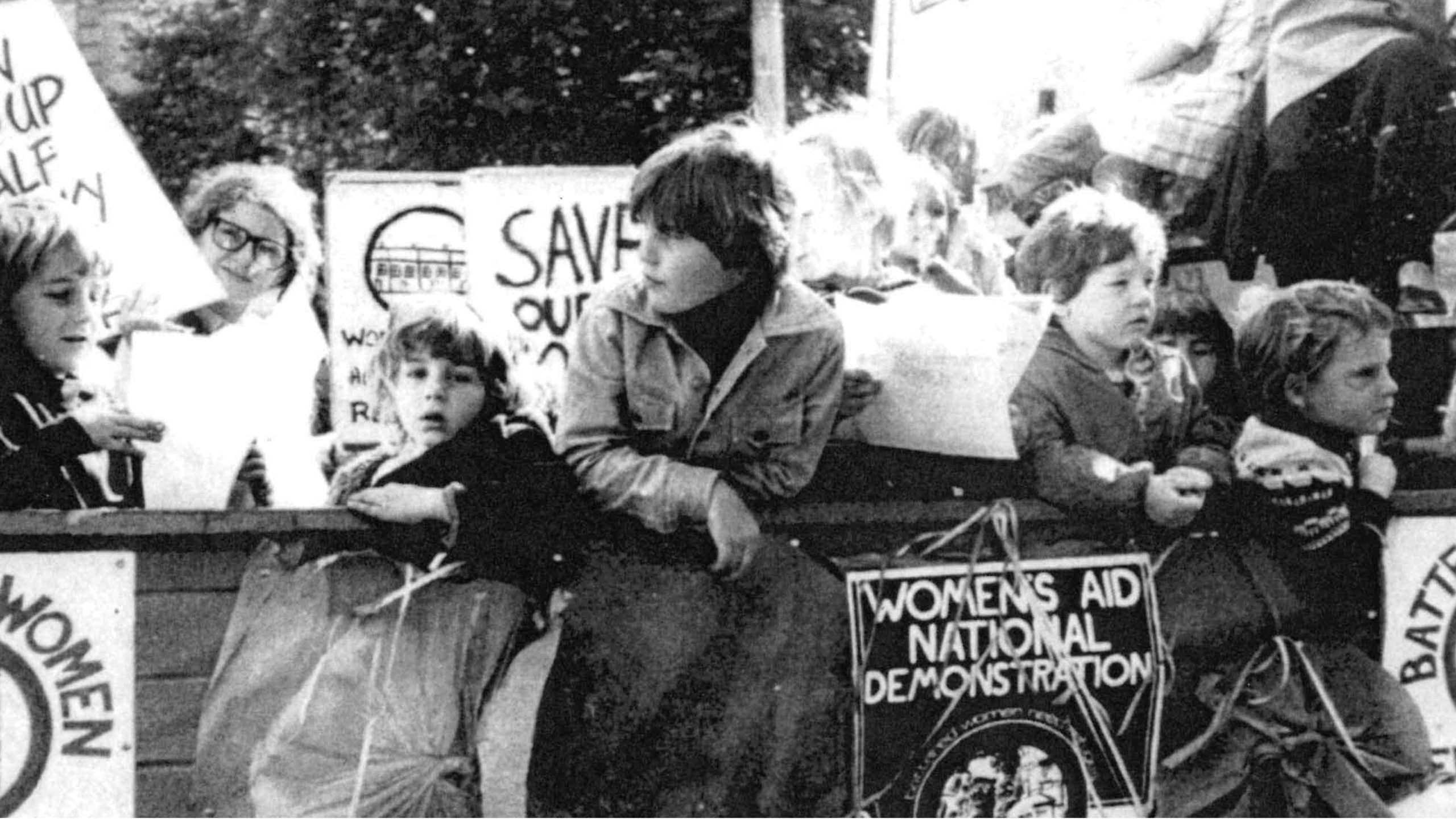
1980s: Expanding Support
1981: The Matrimonial Homes (Family Protection)(Scotland) Act 1981 receives Royal Assent. It allows women to have their abusive spouse excluded from the matrimonial home.
1989: Rape within marriage is legally recognised as a crime in Scotland. This marks a crucial turning point in the history of domestic abuse in Scotland, following decades of campaigning by women’s organisations, survivors, and activists, including Scottish Women’s Aid, who challenged laws that treated wives as the property of their husbands. Before this change, marriage was often used to justify violence and sexual abuse, reinforcing the harmful belief that consent was automatic and permanent. The 1989 ruling helped dismantle that belief and affirmed a fundamental truth that underpins modern understandings of domestic abuse in Scotland today: consent must be freely given and can be withdrawn at any time
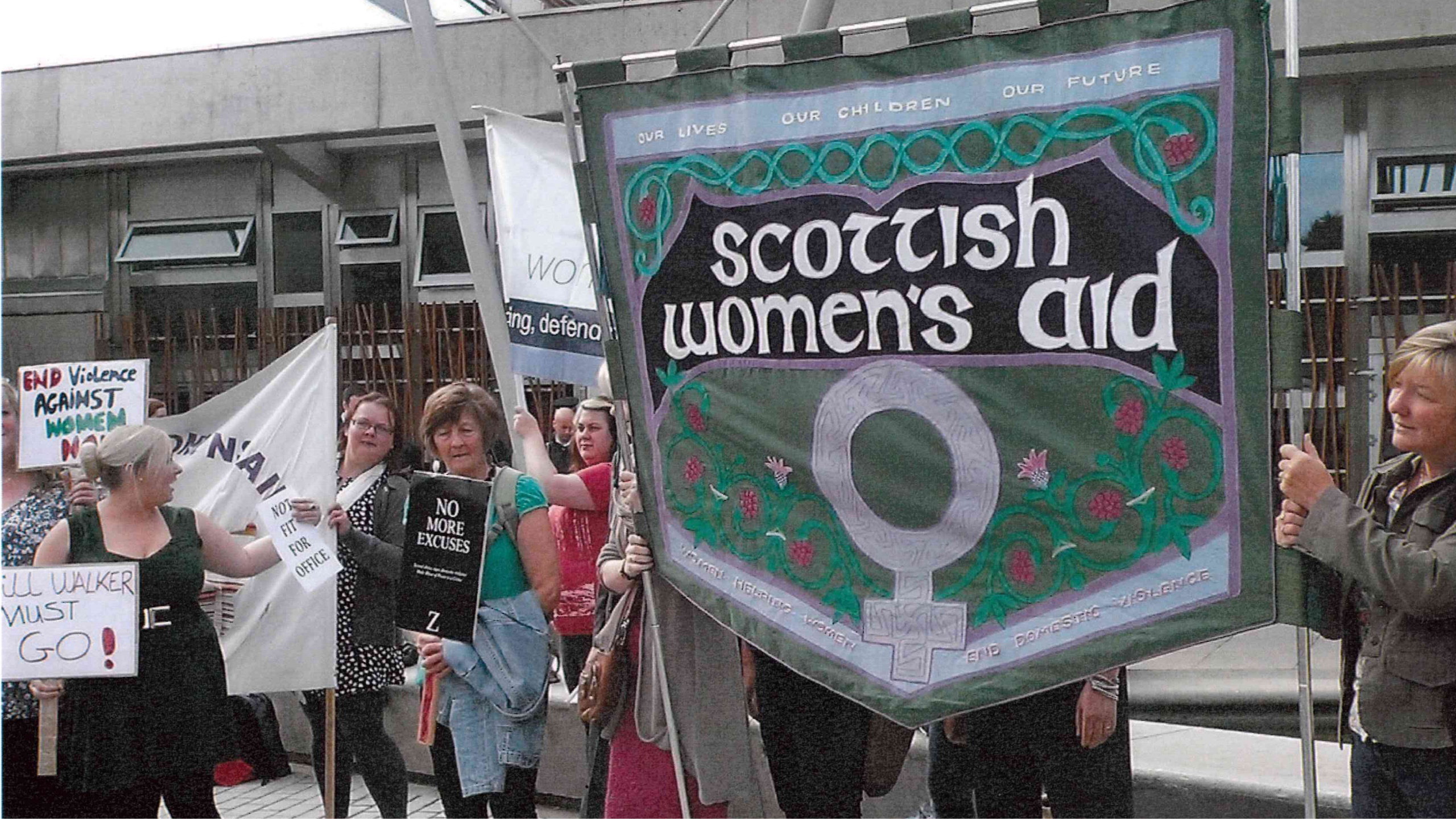
1990s: Influencing Policy
1990: Police guidelines are published on how to respond to domestic abuse. It represented a significant shift away from treating domestic abuse as a private family matter.
1997: The Protection from Harassment Act 1997 is introduced, allowing women to apply for civil non-harassment orders to prevent further harassment from perpetrators
1998: The Convention of Scottish Local Authorities (COSLA) published guidance on developing partnerships to tackle violence against women. Scottish Women’s Aid was a driving force behind this development and these partnerships continue today, with local Women’s Aid groups as members along with representatives from the police and local authorities.
1999: The Scottish Parliament debates domestic abuse for the first time in October. The Domestic Abuse Service Development Fund is announced, increasing funding available to develop refuge and support services for women, children and young people with experience of domestic abuse.
1999: Scottish Women’s Aid launches ‘Children and Young People Said’, the first campaign to highlight the impact of domestic abuse on children and young people.
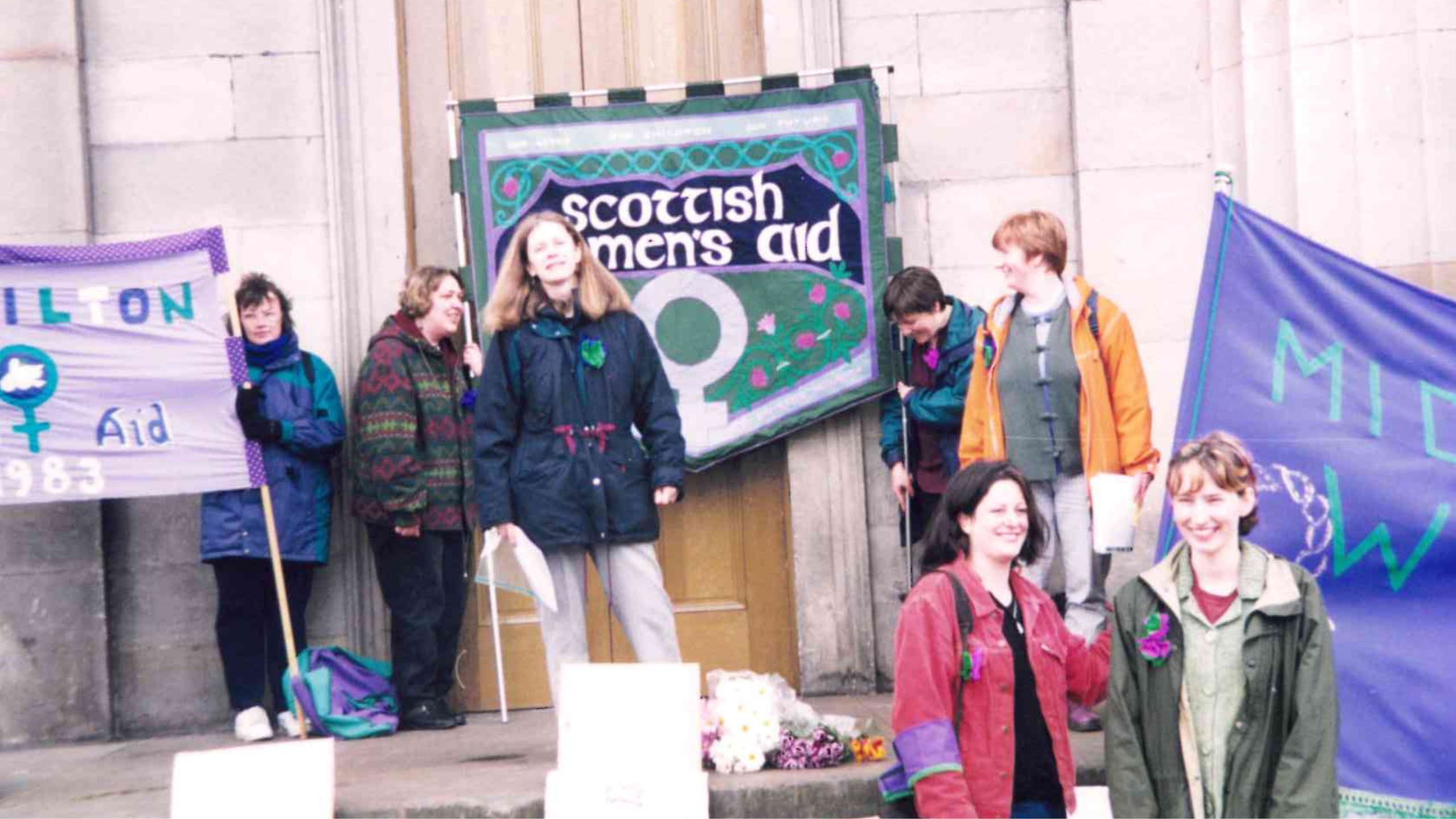
2000s: Strengthening Services
2000: Scottish Women’s Aid was a key partner in devising and implementing the first ever National Strategy to Address Domestic Abuse in Scotland, published by The National Partnership. The Strategy identified key areas of work at national and local level, and defined domestic abuse.
2000: Scottish Domestic Abuse helpline is established. It’s an important development because it provides a dedicated source of confidential information and support for people experiencing domestic abuse, as well as for family members, friends and others contacting the service on their behalf.
2000: The Domestic Abuse Service Development Fund was established in Scotland by the then Scottish Executive. It was the first time central government directly funded local domestic abuse services.
2001: The Protection from Abuse (Scotland) Act 2001 is enacted, one of the early measures of the Scottish Parliament and the first Committee Bill. This allowed women, regardless of their marital status or right to live in a family home, to apply to the court for an interdict with a power of arrest attached.
2002: Scottish Women’s Aid launches the Listen Louder campaign, a three year campaign, aiming to give children and young people affected by domestic abuse a direct voice in policy and service development. Instead of viewing children simply as witnesses to their mother’s abuse, it recognised they were victims/survivors with their own experiences and support needs. The children and young people spoke directly to government ministers, and as result of this campaign the Scottish Government set up a high level national group to write a delivery plan for children and young people in Scotland.
2003: The then Scottish Executive published a research report on Refuge Provision in Scotland.
2003: Scottish Women’s Aid published ‘Sustaining Tenancies’, research about women’s experiences of being re-housed following domestic abuse.
2004: ‘In Partnership, Challenging Domestic Abuse’, the first Protocol on the best practice and policies to be followed by the Scottish Police Service and COPFS is signed by ACPO(S) and launched at the Scottish Women’s Aid conference. This Protocol is an important tool still in use, and has been updated several times.
2004: The Violence Against Women Service Development Fund is established, increasing the funding available to address all forms of violence against women.
2004: Communities Minister Malcolm Chisholm announced funding to expand Women’s Aid children’s services. Each service had to have a minimum of three children’s workers.
2006: SWA celebrated its 30th birthday and the Scottish Government established the National Domestic Abuse Delivery Group to bring together work to improve responses to, and outcomes for, children and young people experiencing domestic abuse.
2006: The ‘Safe Contact’ campaign ensures that the Family Law (Scotland) Act 2006 requires courts to consider domestic abuse when making child contact decisions.
2007: Scottish Women’s Aid published research on ‘The Support Needs of Children & Young People Who Have to Move House Because of Domestic Abuse’.
2008: The Scottish Government published the National Domestic Abuse Delivery Plan for Children and Young People. This set out thirteen Priorities for Action for the next three years, to enable more effective protection, provision, prevention and participation for all children, young people and their families affected, or at risk of being affected, by domestic abuse in Scotland.
2009: The Sexual Offences (Scotland) Act 2009, a landmark piece of legislation that overhauled Scots law on sexual crimes, heavily based on recommendations from the 2007 SLC Report on Rape Discussion Paper, is passed. It introduced a clear legal definition of consent as “free agreement” and specified that consent can be withdrawn at any time, while outlining circumstances where consent is absent.
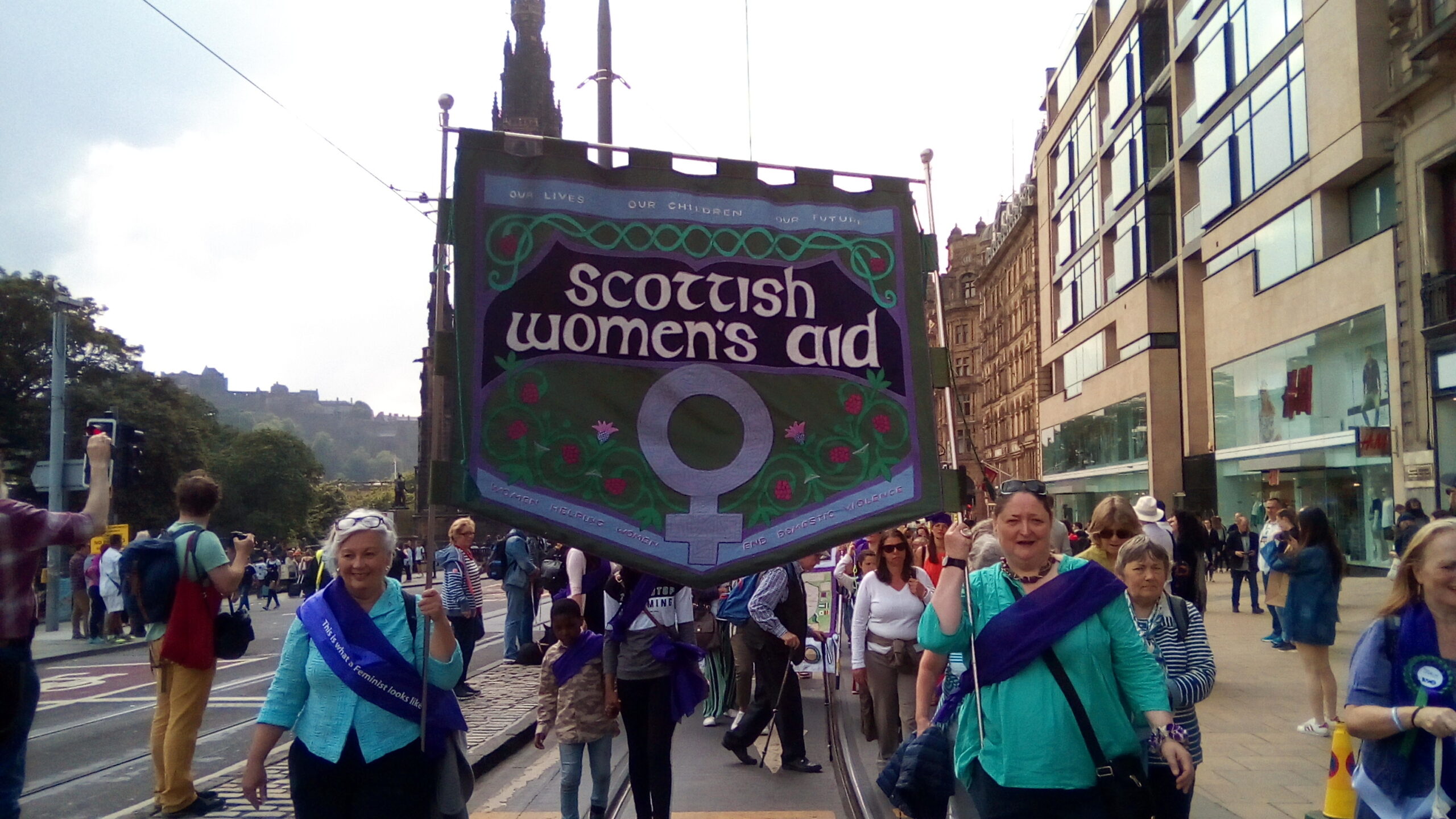
2010s: Driving Change
2010: As a result of lobbying by Scottish Women’s Aid, the Criminal Justice and Licensing (Scotland) Act 2010 introduces a new offence of alarming and threatening behaviour, plugging a gap in criminal law protection. SWA also supported lobbying that lead to the creation of a new offence of stalking, which is also included in the Act.
2011: Scottish Women’s Aid supported the Domestic Abuse (Scotland) Act 2011 which creates a process whereby breach of interdicts obtained to protect against domestic abuse could be considered a criminal offence and makes the process for obtaining non-harassment orders due to domestic abuse easier. SWA also lobbied for and supported the Forced Marriage (Protection and Jurisdiction) (Scotland) Act 2011, which created, for the first time, a civil protective order with criminal penalties on breach, to protect those at risk or who had been forced into marriage.
2013: Scottish Women’s Aid campaign to have Scottish Civil protective orders recognised as relevant evidence in applications for Anonymous Voter Registration succeeds with the signing of the Representation of the People (Scotland) (Description of Electoral Registers and Amendment) Regulations 2013.
2013: SWA identified a gap in protection for women experiencing online abuse, what was initially referred to as “revenge porn” but, subsequently more appropriately identified as “non-consensual sharing of intimate images and began a campaign for an identifiable and specific offence naming this abuse.
2014: Equally Safe: Scotland’s strategy for preventing & eradicating violence against women and girls, developed with the support of Scottish Women’s Aid, and other specialist VAWG organisations and statutory partners, is published by the Scottish Government. This aimed to create a Scotland where women and girls live free from abuse and attitudes that help perpetuate it. It highlighted that violence against women and girls is a violation of the most fundamental human rights, referring to legal duties to prevent violence against women and girls set out by several international treaties and human rights obligations and committed the Scottish Government to meet the benchmark set by each of these international treaties and obligations. This Strategy has been updated and refreshed several times since its inception.
2014: Scottish Women’s Aid worked to strengthen support for victims and witnesses through the Victims and Witnesses (Scotland) Act 2014. The final Bill gave women experiencing domestic abuse, stalking and sexual abuse, an automatic right to access special measures when giving evidence in a criminal court.
2014: Scottish Women’s Aid was appointed as a member of the Reference Group supporting the work of Lord Bonomy’s Post-corroboration Safeguards Review, established to consider what additional safeguards and changes to law and practice may be needed following the planned abolition of corroboration in the Criminal Justice Scotland Bill.
2015: The Disclosure Scheme for Domestic Abuse Scotland, allowing people to request information from the police about their partner’s history of domestic abuse is rolled out.
2016: Scottish Women’s Aid marked its 40th anniversary, and to celebrate this important milestone the Heritage Lottery Fund awarded the organisation, in partnership with Glasgow Women’s Library, the University of Glasgow Centre for Gender History, and Women’s History Scotland, a grant for a project documenting the ground-breaking work of Women’s Aid in Scotland over the last four decades. This recorded the achievements of the pioneering women who founded the organisation in the 1970s, and the continued efforts of Women’s Aid to protect survivors, affect legal change and challenge entrenched attitudes toward domestic abuse in Scotland.
2017: Scottish Women’s Aid launched ‘Speaking out; 40 years of Women’s Aid in Scotland‘ project.
2016: Launch of Scotland’s Domestic Abuse and Forced Marriage Helpline. It provides a national, confidential support service for people experiencing domestic abuse or forced marriage. Support not only for victims/survivors, but also for family members, friends, colleagues and professionals concerned about someone experiencing abuse. It means specialist support is more accessible across Scotland and recognises domestic abuse and forced marriage could require both emotional and practical support, not simply police or legal intervention.
2019: The Domestic Abuse (Scotland) Act 2018 comes into force. It’s a major change in Scottish domestic abuse law because it creates a new and specific criminal offence covering a course of abusive behaviour towards a partner or ex-partner. The Act, which SWA was heavily involved in the creation and implementation of, recognises domestic abuse is not limited to physical violence. It includes psychological abuse and coercive or controlling behaviour, such as controlling a partner’s daily activities, isolating them from friends or family, frightening or humiliating them, making them dependent on the perpetrator and covers behaviour such as economic and financial abuse .
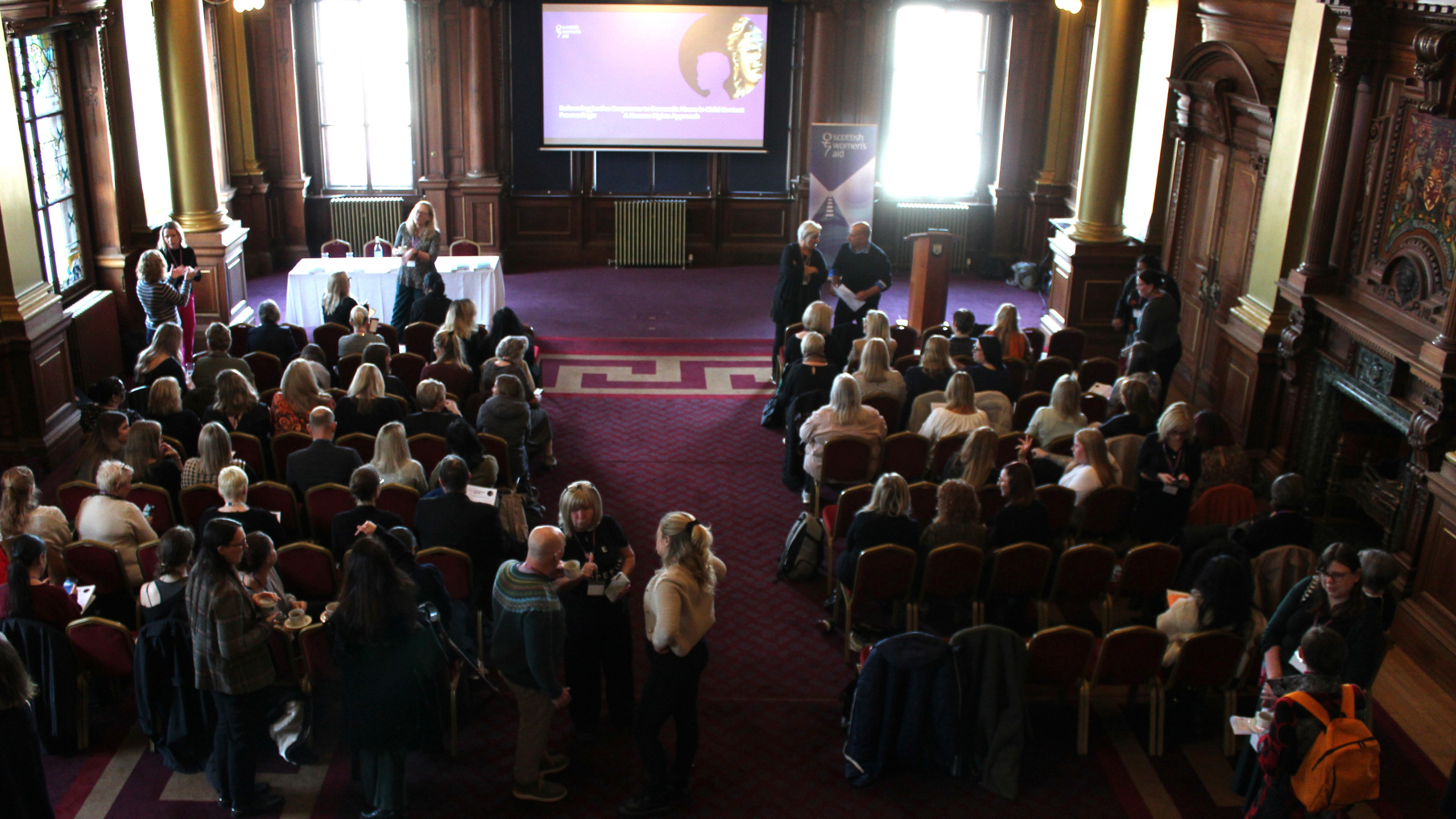
2020s: Continuing Our Mission
2024: Launch of the Fund to Leave pilot which helps women pay for the essentials they needed to support the costs of leaving an abusive partner.
2026: The second round of the Fund to Leave Pilot. Participating Women’s Aid services and the Women’s Aid central funding delivery service distributed Scottish Government funding to over 1400 women and their children located in Scotland.
Celebrating 50 Years of Scottish Women’s Aid
For five decades, Scottish Women’s Aid has supported women, children and young people experiencing domestic abuse, campaigned for change, and worked towards a future free from abuse. While much has changed since the first Women’s Aid groups were established in 1973, our commitment to supporting survivors and challenging inequality remains the same.
Our 50th anniversary is an opportunity not only to reflect on our history, but also to look ahead to the future. See the SWA Strategy 2025-2030 for how we intend to shift power and practice to make change real for women and children in Scotland.
*Pre-2010 photographs courtesy of Glasgow Women’s Library.