by Brenna Jessie | Feb 7, 2018 | Uncategorised
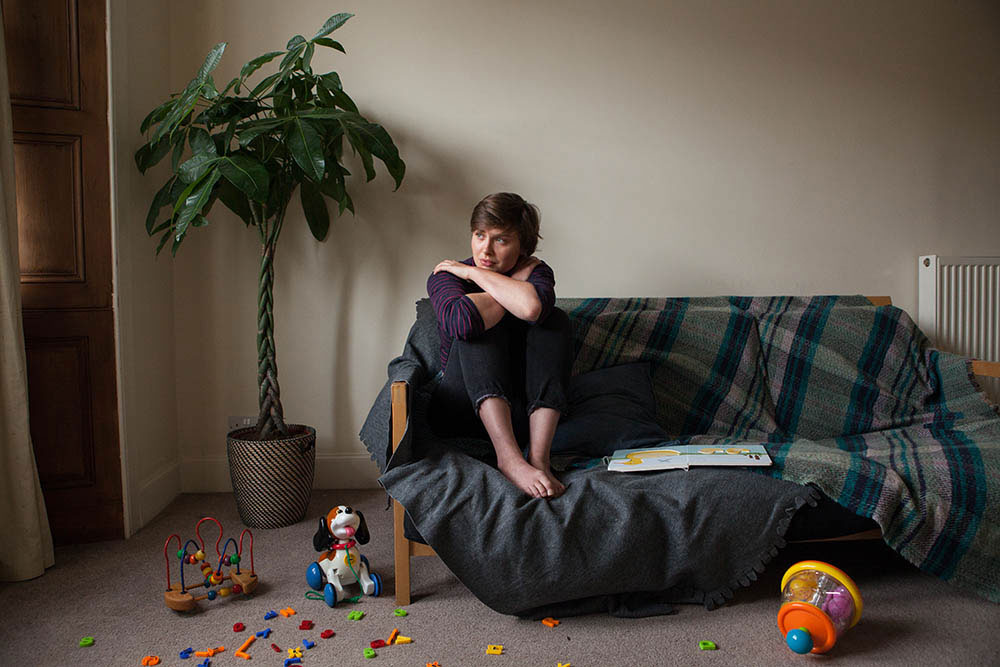
Photo copyright: Laura Dodsworth
There’s a reason the addresses of refuges are kept secret. By now it’s no shock to us abusive men will try to trace, follow, intimidate and harass partners and ex-partners, even to the very location that women and their children (if any) are trying to escape to. Far from being a suited stranger observing from a dark alleyway, the majority of cases of stalking are perpetrated by a partner or ex-partner. That is why Women’s Aid workers and other services who support women are well versed in creating safety plans and managing risk. It’s also why in partnership with media coop the Scottish Women’s Rights Centre is piloting an innovative mobile app for services to use to support victim-survivors to record their experience – more on FollowItApp soon.
Stalking – like most crimes – happens on a sliding scale of severity, but all abuse is serious. In many ways our culture gives permission for this behaviour, because ‘he just can’t take no for an answer’. This idea has become normalised – romanticised even – as typical masculine behaviour and an excuse for men to pursue women who have already said ‘no’, rather than evidence of entitlement and potentially abuse.
Stalking is a by-product of gender inequality, a society that gives men agency and power and denies it to women. It makes up one part of the epidemic of violence against women across the world, and like most crimes of violence against women, it often goes underreported.
The Scottish Women’s Rights Centre exists to fill the gap between women’s experiences of violence and abuse and their access to justice; a big part of what we do is supporting women to navigate legal systems and institutions to pursue justice. There’s no denying that Scots law is complicated and while there are lots of reasons why victim-survivors of stalking don’t report their experience to the police, something we’ve found at the Scottish Women’s Rights Centre is that this is because it just isn’t always recognised as criminal behaviour. On top of that there are practical challenges to recording an experience that can be incredibly intense and diverse.
In Scotland stalking is prosecuted as a course of conduct – this means an incident that takes place two or more times – that places another person in a state of fear or alarm. That means that non-criminal acts, for example sending a text message that says ‘why haven’t you left the house all weekend?’, become criminal and can therefore be reported when they happen twice or more and when they cause the victim to feel afraid. The above text could easily make someone feel afraid, because it’s meant to let them know that they are being watched.
Stalkers use a wide range of behaviours and tactics to make their victim afraid. This can include unwanted calls, texts, emails or messages and comments on social media. It can mean turning up unexpectedly, following, loitering and giving verbal abuse, with some stalkers installing monitoring software on their victims’ phones or laptops to track their every move. It can even include leaving unwanted gifts or cards in places where they shouldn’t be, behaviours designed to make sure the victim is aware and scared, but feeling powerless to do anything about it. It can be all of these things at once. To the outside world, a bunch of flowers on your desk means nothing, it could even be interpreted as a nice gesture, but in the context of stalking and domestic abuse, it’s quite the opposite and it can be overwhelming.
This is one of the reasons why we (in partnership with media coop) have created FollowItApp, something we hope will provide a digital solution to an age old problem. We want to make it as easy as possible for women to be able to record and evidence their experience through a creative log with options for pictures, screenshots, videos and notes. Those who use it might have no intention of ever reporting their experience of stalking to the police, or they might change their mind and choose to report five years later. We won’t tell women what to do with the information, we’ll just help store it in a way that is quick, convenient and safe. If a victim-survivor ever chooses to report their experience, having this information stored (for 15 years) could come in useful.
Being stalked is traumatic and it is terrifying; it’s virtually impossible to feel safe when you think that someone is watching your every move. Nobody expects to be stalked, or to have to report it to the police. It should never come to that, but unfortunately far too often it does. Recording incidents and their impact through FollowItApp is a helpful protective measure that means that if any behaviour does escalate, or if the victim-survivor changes their mind and chooses to pursue justice, then information is reliably saved and the course of conduct and its impact are much easier to demonstrate.
FollowItApp is currently in its pilot stage. If you are receiving support from or work at a local women’s aid or rape crisis centre and want to get involved in a project that will change the landscape for victim-survivors in Scotland get in touch: info@scottishwomensrightscentre.org.uk

by Brenna Jessie | Jan 31, 2018 | Uncategorised
Tomorrow Members of the Scottish Parliament (MSPs) will gather to debate Stage 3 of the Domestic Abuse (Scotland) Bill. This Bill has the potential to positively transform the way we respond to survivors and to challenge outdated attitudes regarding domestic abuse. For the first time in Scotland, the legal understanding of domestic abuse will expand beyond the narrow definition of abuse as one incident of violence to an understanding that recognises ongoing patterns of abuse. Our laws will criminalise the insidious and coercive methods that abusers use to control their victims and therefore more accurately reflect the lived experiences of survivors.
The Domestic Abuse Bill’s contents and future prosecutions will receive a high level of media coverage. Stories and headlines will reach survivors, perpetrators, children, adults who grew up with domestic abuse, professionals and communities. This is a huge opportunity for media outlets to produce news, features, comment and headlines which are accurate, sensitive and in the public interest. This is why Zero Tolerance has produced: ‘What Journalists Need to Know About the Domestic Abuse (Scotland) Bill’. Written with the help of Scottish Women’s Aid and ASSIST, this resource sets out a clear set of guidelines to help journalists, writers, bloggers and anyone hoping to report on this bill feel confident to do so accurately and sensitively.
The briefing reflects the fact that the media we consume plays a large part in shaping our attitudes.
Too often we see distorted coverage of domestic abuse; stories which suggest that abuse is a by-product of a messy and difficult relationship of equals rather than an expression of power and control by one person over another.
Apart from being inaccurate, this type of reporting could encourage a woman who is living with an abusive partner to stay for fear of not being taken seriously.
In 2017, Zero Tolerance undertook a media monitoring project, reading eight national newspapers every day, for one week. We found that a total of 134 stories on violence against women appeared, averaging 2.4 stories per newspaper per day. Out of these 134 articles, only 7 contained some form of statistical evidence with 4 newspapers using no contextual data at all. Despite 55 stories discussing the relationship between spouses – the most common type of relationship examined – only 2 articles characterised the reported violence as domestic abuse. The problem with this approach is that it contributes to the myth that abuse is an inevitable tragedy that occurs in a vacuum. Within Scotland, there were 58,810 domestic abuse incidents reported to the police in 2016-17. Where the gender of the victim was recorded, women made up the majority (79%) of the victims in these incidents. Violence against women is a huge and complex problem that is caused by gender inequality. But without providing this broader context, it is too easily presented as an inexplicable tragedy with no solution, rather than a systemic feature of an unequal society that we have the power to challenge.
The responsibility to report on violence against women accurately and sensitively goes beyond coverage of the Domestic Abuse Bill. In partnership with Scottish Women’s Aid, and in consultation with survivors of abuse, we have produced a set of stock images for news outlets to use, these images more realistically depict women’s lived experiences of abuse and avoid harmful stereotypes. You can download these here.
Our Handle With Care guide lays out clearly how to report on violence against women with sensitivity and accuracy. You can download it here.
Guest blog written by Lydia House of Zero Tolerance.

by Brenna Jessie | Dec 8, 2017 | Uncategorised
It was an absolute honour to speak at the Scottish Women’s annual conference this year and to see familiar faces present from so many different agencies.
There was a real energy in the room which, I believe, comes from our shared sense of purpose. We need to work collaboratively to understand and uncover offending; to prosecute those who have offended, to support those affected and prevent future offending –with our common goal being to eradicate domestic abuse from modern Scottish society.
The focus of the conference is another significant milestone in the journey toward addressing domestic abuse in Scotland – the Domestic Abuse (Scotland) Bill.
The Bill, if passed, will signify a seismic change in the law. It will make criminal the insidious abusive behaviour that at present we are unable to prosecute.
It sends a clear signal as to what modern day Scottish society aspires to – equality and respect between genders – and what collectively we will not tolerate – abusive behaviour in all its forms, whether that be physical, sexual, verbal, financial or other forms of non-physical abuse coercive and controlling behaviour. A lot of progress has made from a legal perspective on domestic abuse in recent years, and police and prosecutors have continued to refine their approach.
In 2013, The Crown Office and Procurator Fiscal Service (COPFS) appointed the first National Procurator Fiscal for Domestic Abuse, Anne Marie Hicks, to enhance our response to tackling domestic abuse.
Earlier this year, COPFS and Police Scotland relaunched our Joint Protocol on domestic abuse, after in-depth stakeholder consultation. The Protocol commits both of our organisations to a consistent and robust approach to domestic abuse and recognises the significant and enduring impact which domestic abuse can have on victims and children.
Over the past year, the law in relation to domestic abuse has evolved with the creation of the statutory aggravation of domestic abuse, which courts must take account of in sentencing, and the specific offence of intimate image abuse, a crime which has been made all the easier to commit by advances in technology.
While there are significant challenges for prosecutors in domestic abuse cases, there has also been a gap in the law, which has meant that some of the controlling, demeaning, isolating behaviour that often epitomises domestic abuse has not been recognised as criminal. This type of behaviour has existed in a kind of netherworld – not acceptable, but also not, of itself, illegal.
I’m proud of the role of the Crown, particularly my predecessor Lesley Thomson QC, in galvanising action to criminalise the full extent of domestic abuse. As Solicitor General, in 2014 she led the way by calling for the creation of a specific offence of domestic abuse, to recognise the true experiences of victims of long-term abuse.
The new Domestic Abuse (Scotland) Bill creates an offence of engaging in a course of abusive conduct towards a partner or ex-partner with intention of or recklessness about causing that person physical or psychological harm. The course of criminal conduct may include behaviours already recognised as criminal, such as violent, threatening or intimidating behaviour, but can also include behaviour intended or likely to isolate, humiliate, degrade, subjugate, frighten, punish, control, regulate, monitor, or deprive or restrict the victim’s freedom of action.
The creation of the domestic abuse offence will assist prosecutors in holding more perpetrators to account by enabling us to prosecute courses of abusive behaviour not currently recognised as criminal, including coercive and controlling behaviour. By enabling us to prosecute the totality of the abusive behaviour, rather than simply isolated incidents of violent or threatening behaviour, this will more naturally reflect the very real, lived experiences of victims of domestic abuse and put the true picture of offending before the court.
There was a lot of interesting discussion at the conference on the challenges and opportunities that the Bill will bring.
From a prosecutors perspective, evidence-gathering in relation to a coercive control type offence may be a more challenging process than, for example, for an assault or breach of the peace.
A more nuanced offence will require evidence to be gathered in innovative ways. The evidence gathering process must be robust to enable the whole picture to be presented. Evidence sources may include friends, family, children, neighbours or work colleagues who may have been aware of some of the behaviours and the impact on the victim. The police may look for evidence from other sources too, such as social media.
We also recognise that proof of the new offence will usually require victims, and in some cases, children, describing their experiences; this is not an easy task in an adversarial criminal justice system where the burden of the proof is on the Crown. We are committed to doing all we can as a criminal justice system to recognise that and, working collaboratively with other agencies and organisations, to find ways of supporting victims to give their evidence in the best way possible.
The new provisions in the Bill also recognise the harm that domestic abuse does to children and the need to offer them better protection. The creation of an aggravation of involving a child in domestic abuse will allow the likely impact on children to be recognised, recorded and taken into account in sentencing. The enhanced provisions in relation to non-harassment orders, allowing the court to grant an order in respect of a child, residing with either the victim or the perpetrator, or for whom the child aggravation relates, could also offer additional protection and reassurance to children after the court proceedings have ended.
I am very conscious of the responsibility of the Crown to use the new legislative provisions to the full, to prosecute robustly and effectively in the public interest; meeting the evidential and legal challenges that this type of offending presents by our professionalism and expertise in the field. This ground-breaking legislation will give us important new weaponry in the fight to rid our nation of this insidious crime.
The criminal justice response is only one part – an important part – of a wider societal response. There is a need to raise awareness among the public and create a society where domestic abuse is not only recognised as a crime but is universally condemned as unacceptable.
The Lord Advocate and I and the Crown Office and Procurator Fiscal Service are committed to playing our part in tackling domestic abuse, and other forms of gender-based violence. We shall continue to work effectively with other partner agencies and organisations, including Scottish Women’s Aid, to prevent and hopefully one day eradicate abuse in our society.
– Solicitor General Alison Di Rollo
by Brenna Jessie | Dec 7, 2017 | Uncategorised
CW: mentions of violence against women, personal account of rape, forensic medical examinations, trauma.
When my court case was dropped, my appeal failed and my rapist walked free, it was more than just devastation I had to deal with. Since then I’ve carried with me a profound and cavernous sense of grief I know not how to shake off.
After two years of intrusive interviews, internal exams, long periods of police silence and soaring anxiety, I was denied the burial I needed to move on from.
The sense of injustice remains just as palpable to me as the day it slipped from my officer’s mouth. The words fell into her lap as she sat on my couch, face downcast, staring at her knees. Slow and heavy, they hit me like a fist to the gut. And yet there they were. And there they remain. A fist to the gut. Just as palpable.
I haul this dead loss with me everywhere I go, through every new job, every new relationship. Endlessly, I look for a place to put it to rest, but I find nothing. Life rolls on. I feel the same.
So imagine the fire ignited in me when I realised there was legislation on Britain’s doorstep that would put the wellbeing of survivors like me first, not that of our perpetrators. And then the escalating anger that came from understanding that, like so many other women’s rights issues, it too had been swept under the UK Government’s carpet.
The Istanbul Convention (IC) is a sophisticated piece of legislation that outlines a survivor-focused approach to prosecution, ensures the adequate funding of women’s services and the strategic implementation of prevention of violence against women in all forms – be it female genital mutilation (FGM), rape, domestic violence, or so-called honour-based violence.
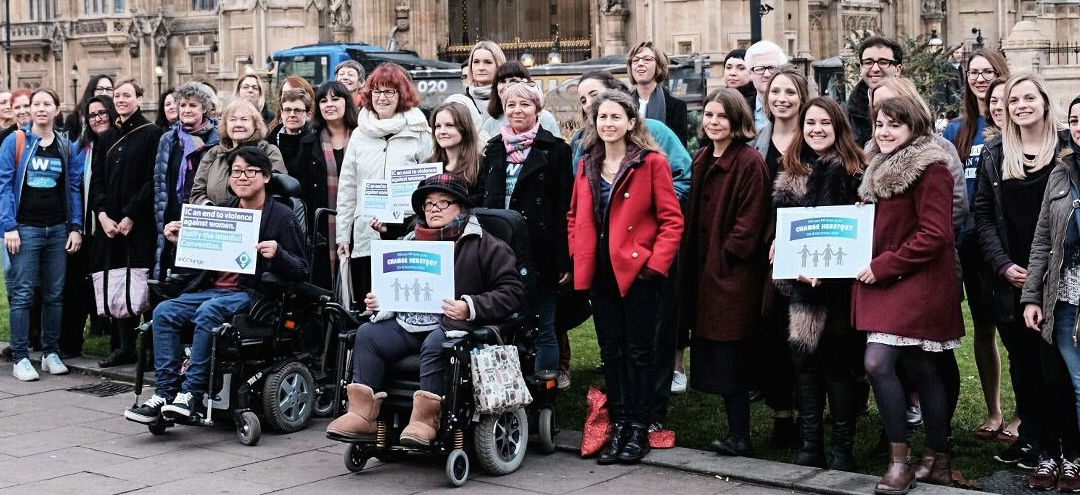
It is comprehensive, it is effective, and it is designed by women – absolute experts in law, trauma, therapy and justice – for women. As such, we – the survivors, service workers and allies that make up IC Change – will not rest until it is properly passed into law.
David Cameron actually signed a pledge to see the Istanbul Convention made law back in 2012. Now, as we near the end of 2017, after the harassment scandal of Westminster and the viral impact of the #metoo movement, the need for the Istanbul Convention is increasingly critical. Not least because there are some great strategies Parliament could very well use to tackle the culture of misogyny it seems to be so confused about dealing with.
Earlier this month, thanks to the law we, together with former MP Dr Eilidh Whiteford, passed in April this year, the first ever public government report into the progression of the Istanbul Convention was issued on time and by the deadline. Yet, despite promises made by Theresa May, Home Secretary Amber Rudd and overwhelming cross-party support, it showed little of the advancement it deserves. It was not good enough, and we demand to see more.
We must continue to hold the UK Government to account for this. We must continue to be heard. We must continue to fight – as a very real, very human 51 per cent of the United Kingdom – to be protected from harm and respected as equals. And as ever, we look to Scotland to help us achieve this goal.
Scotland as a nation has already made great strides towards the advancement of gender equality in Britain, not least for its very vocal campaigning against the rape clause, the two-child tax credit limit and, let us not forget, the furthering of the Istanbul Convention through the work of MPs such as and Gavin Newlands and former MP Dr Whiteford.
But there is more that needs to be done – and we need Scotland’s help to do it.
Support us, support our cause, and make sure IC Change remain an ever-present force in Parliament to be reckoned with. Sign our petition, follow us on Twitter, and support us as we continue to campaign to see this battle, one of so many thousands of women, finally ended. We all deserve to see the injustice of gender-based violence buried for good, and if we can do it in the next few years, it will, at the very least, make the suffering I have felt that little bit more bearable.
– Jen Selby, IC Change
Scottish Women’s Aid are proud to have worked with many organisations to support the progression of the Istanbul Convention, including Engender and Women’s Aid Federations in England, Wales and Northern Ireland.
by Brenna Jessie | Dec 5, 2017 | Uncategorised
Over the course of the last two years, the Speaking Out: Recalling Women’s Aid in Scotland project collected oral history interviews with 62 people involved in the 40-plus years of Women’s Aid in Scotland. Service users, workers, volunteers, academics, and politicians shared their experiences of the movement, from establishing and accessing the earliest shelters in Edinburgh and Glasgow to witnessing this year’s launch of landmark legislation recognising emotional and psychological domestic abuse.
In the current climate of funding cuts, political upheaval, and misogynistic trolls, there are certainly enough challenges to keep the movement busy. So why did we spend the last two years looking back?
It can be difficult to gain perspective on how far we’ve come when new challenges constantly loom on the horizon. Taking a moment to recognise the movement’s progress is re-energising, and goes some way in countering the burnout effect of bad news.
In a small but meaningful example, you may have seen that Lochaber and Skye Police recently tweeted an open ‘letter’ to an unnamed woman on Skye experiencing domestic abuse (they later stated that it was for all women, everywhere). They identified a range of abusive behaviours she might be experiencing, and outlined the support available to her:
While a series of tweets from the police might not exactly signal the end of the patriarchy, what this does capture is the radical change in attitudes made possible by the Women’s Aid movement. For many of the women interviewed by the project, a world in which the police use public platforms to call out domestic abuse and offer support to survivors was unimaginable when they began their work. Just 30 years ago, in the same area of Scotland (and across the rest of the country), pioneers of the movement were told ‘that sort of thing doesn’t happen here’:
“We were doing a radio programme on Radio Scotland [in the early 1980s] in Inverness and a couple of volunteers went up to speak and this minister phoning up saying, ‘A Skye man would never abuse a woman. Never lift his hands to a woman’. I think he really believed it, you know? He believed what he was saying so I think attitudes made it hard for us, or harder for us.” – Marilyn Ross, former Ross-shire Women’s Aid worker.
The women in the movement refused to accept complacency from those who were in positions of public protection, naming domestic abuse as a pervasive, public issue, rather than a private one. They offered a truly radical education:
“I think one of the strangest things that I’ve ever seen was a room full of big old fashioned coppers reduced to tears by the testimony of a survivor … a small petite little woman who got up and spoke in front of this room full of cops about what it was like for her and what she went through. And what it was like when they came out and what they could have done differently. These great big six foot five guys with tears in their eyes…” – Liz Fotheringham, former Inverness Women’s Aid worker and founding member of Lochaber Women’s Aid.
These stories all happened on and around Skye, but they’re indicative of a country-wide culture change. It is because of the tireless work of women in Women’s Aid to educate and inform the police, the media, and the public that today, Lochaber and Skye Police receive international positive press coverage and support for their open letter, and many women feel able to publically share their own experiences of abuse in response.
The past informs the present – understanding our history allows us to face our future with resilience and a sense of community. By all accounts, we still have a long way to go. Violence against women has new platforms, perpetrators still hold positions of power, and austerity continues to restrict the space that workers have to provide the best possible service.
However, the stories collected by the project are ones of challenges being overcome, time and time again, due to the resilience, solidarity, and creative thinking of the women in this movement. These qualities continue to be central to the work the Women’s Aid network do today to end domestic abuse and its root cause – gender inequality.
We hope the Speaking Out project has been successful in drawing together evidence of the power the movement has to transform individual lives and entire communities. The work of the last 40 years achieved more than many thought possible. No matter how far we have to go, Women’s Aid has brought us significantly closer than we were to a safer, fairer, and better world for women in Scotland.
“That contrast between 1982 [joining the movement as an admin worker] and around about 2007 [becoming CEO of Scottish Women’s Aid], unbelievable. To have the overview to see that is quite something. You know, I feel in some ways quite privileged because I know that younger workers or workers who are involved more recently sometimes go, we’re never getting anywhere. And I’m thinking, ‘we are’. We are, we really are. And we’ll go on getting places.” – Lily Greenan, former CEO of Scottish Women’s Aid.
Blog by Susie Dalton, Heritage Engagement Officer at Scottish Women’s Aid.
Although the project is coming to an end, a number of resources continue to be available to local groups and the public. The project exhibition, covering the history of the movement and featuring oral history interviews collected by the project, is available to borrow from Scottish Women’s Aid – get in touch for more details. Our documentary film, learning resource, and snippets from the oral history interviews (featured in this post) are all available on the project website, and the publication will launch on the website on the 15th December. We’ve also developed an archive toolkit to assist local groups in collecting their own history – get in touch if you’d like to know more.

