


Scottish Women’s Aid, in partnership with Engender & Close the Gap
Highlights from the Mid-Term Review – April 2018
The project’s goal is to challenge women’s unequal access to economic resources by developing and testing effective models of employability that work for women victim-survivors of domestic abuse.

Tactics of economic abuse, used by perpetrators include, but are not limited to:
- Preventing women from attending work or college by refusing to let women learn English, destroying their work clothes, locking women in the house or disrupting sleep.
- Controlling access to money through monitoring pay slips, changing PIN numbers or cancelling debit cards.
- Forcing women to incur costs or get into debt.
- Discouraging women from applying for promotion or positions where they would become the primary earner in the household.
- Requiring the household to relocate, to serve the perpetrator’s career aspirations, regardless of the disruption to the woman’s study, career, and employment.
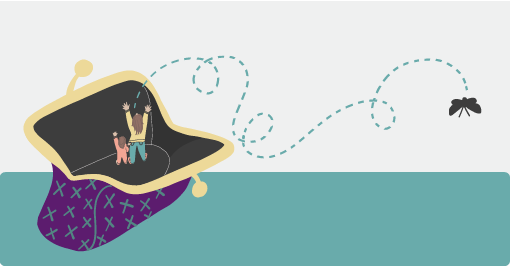
The Scottish Government’s strategy Equally Safe outlines that some risk factors offer abusers economic tools for controlling women. Financial dependence and poverty are both primary risk factors that diminish women and children’s resilience in the face of violence. Addressing women’s economic inequality is a critical preventative measure in Scotland’s efforts to reduce an ultimately eradicate domestic abuse.
Most employability service providers in Scotland use the employability pipeline as a framework for their service provision. The employability pipeline is a linear model where service users progress along a pre-determined support path of five stages (see below).

Women who have experienced domestic abuse rarely fit into a linear employability pipeline.
The employability pipeline does not meet the needs of women who have experienced domestic abuse because they rarely have a linear journey towards paid employment. In the current system, women having experienced abuse describe the pipeline as “a Bungee cord”—they strive to move forward and then get jerked back by the benefits trap or other institutional dysfunctions, and may be forced to re-enter the pipeline at a lower stage than when they last engaged with it, for example:


Woman A pursued a four-month study course and suffered her Job Seekers Allowance being cut. She was unable to access a student loan since the course was not considered full time. With no other support network due to domestic abuse issues, she was forced further into poverty, living off food banks and no other access to income.
Woman B qualified as a nurse in a different country and cannot afford the fee to convert her qualification into the British equivalent. She has been offered jobs in the care sector but work hours are strictly set in three specific shifts, none of which allow her to balance work with childcare. Since the child is over five years old, she does not qualify for any free childcare hours and can therefore not afford private childcare, rent and living costs on the salary of a carer.

Barriers for women having experienced domestic abuse progressing through the Employability Pipeline include, but are not limited to:
- Continuing abuse (or fear of it continuing) from their partner or ex-partner, including at their place of work
- Social isolation if support network been damaged by the abuse, including a distant relocation
- Involvement in costly and lengthy civil law cases, contesting the perpetrators pursuit of unrestricted child contact – extremely disruptive for any work or study patterns
- Losing access to their qualifications, work clothes or equipment for their business, due to relocating for their own safety.
- Having to declare themselves homeless to access services.
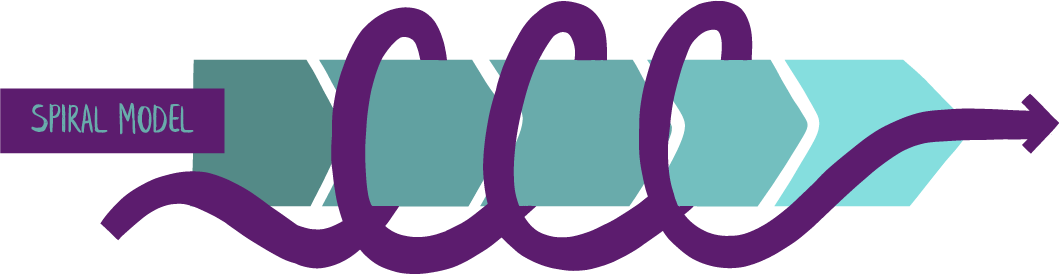
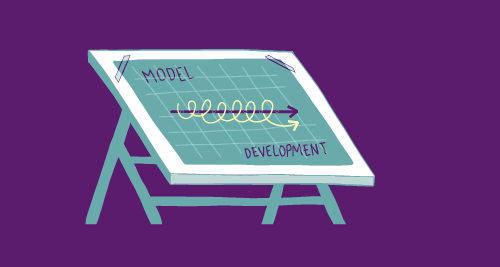
A spiral model uses feedback from women to develop a personalised, flexible employability model. Features which women have told us are most helpful include:
- Follow up with women who disengage from the project, allowing them to return at the stage they left.
- Personalised goal setting – relevant to their current, and often changing situation
- Supporting women for as long as they are moving towards career goals
- Economic resources enabling women to pursue their goals; support for education/training/business start-up
Within the spiral model, Building Equality has tested a number of employability interventions. Those that have been successful incorporate certain elements, including trusted relationships amongst women and the Building Equality project workers, peer support from other women experiencing similar challenges in their lives and advocacy by the project staff – with employability services to promote understanding of domestic abuse issues and tailoring their support accordingly.

Continuing barriers to employment for women having experienced domestic abuse
WORK
- Inflexible jobs that cannot be balanced with childcare needs
- Employment policies and procedures that can be blind or insensitive to domestic abuse issues
- Work environment and behaviour that is unfamiliar to women coming from another country
STUDY
- Specific challenges for older women accessing training courses
- A lack of women-only further education and training options
- Courses that women are steered onto suffer from occupational segregation; over supply of beauty related training and lack of options to seek higher-paid careers
SOCIAL SECURITY SYSTEM
- Women unable to attend full-time college courses because their benefit only allows for part-time study
- Limitations on accessibility to free childcare hours


By the end of the project (December 2018), we hope to further explore the spiral model and make recommendations about the features of effective employability support for women who have experienced domestic abuse. We are convinced that these features hold important implications for employability models for all women.

Click here to watch:
“Our Walk to Freedom” Reflections on the effects of domestic abuse and the road to recovery. A short video made by women from the project, together with Media Education.