by womensaidscot17 | Apr 24, 2023 | Uncategorised

How many times have you read about a ‘spurned’ or ‘jilted’ lover in a newspaper headline about domestic abuse?
The answer is probably many times – maybe even too many to count.
It may be a commonly used phrase but that doesn’t change the fact that it is one which has absolutely no place in responsible reporting of violence against women.
It’s a loaded term, which minimises the behaviour of the perpetrator and attributes blame on the victim.
The many myths and misconceptions that we see in the portrayal of domestic abuse in across our media can negatively impact the public’s understanding of it.
Today marks the beginning of Stalking Awareness Week.
Stalking is an offence that is also misunderstood, not helped by the often cartoonish way it is portrayed in our media and popular culture.
These portrayals lend themselves to images of a stranger hidden in the shadows or a man with binoculars crouching behind a bush.
In reality, most stalking happens within the context of domestic abuse, from an abusive partner or ex-partner.
Domestic abuse is a gendered crime that is rooted in women’s inequality, and so, while anybody can be a victim of stalking, like domestic abuse, it is also an issue that predominantly affects women.
It is a pattern of behaviour that can destroy the victim’s quality of life and sense of wellbeing and safety.
The tactics used by stalkers are many and varied.
Stalking can include digital or in-person surveillance, persistent text-based contact, sending unwanted gifts or post to the victim’s address, following them when they are out or lurking near their home.
To outsiders looking in, the insidious nature of these behaviours can often be overlooked.
Too often, they are seen as harmless – or worse – romantic.
We should be in no doubt: there is nothing romantic about stalking.
Stalking in a pattern of persistent behaviour designed to cause fear and alarm.
Being sent flowers by somebody who loves you and treats you with kindness and respect feels great.
Being sent flowers by somebody you are fearful of feels intrusive and threatening.
Stalking is a criminal offense and there is never an excuse for it.
If you are worried that your abusive partner or ex-partner is stalking you, it can be difficult to know where to turn. We believe you. And we are here to support you, whenever you need us.
Scotland’s Domestic Abuse and Forced Marriage Helpline is available 24/7 on 0800 027 1234 or via email and web chat at www.sdafmh.org.uk. You can also reach out to your local Women’s Aid service – our expert services across Scotland have decades of experience in supporting women and children who have experienced stalking from abusive partners or ex-partners, and they can help you with practical, safety planning and emotional support. If you do want to report your experiences to the police, we can also offer support around that.
by Brenna Jessie | Feb 7, 2018 | Uncategorised
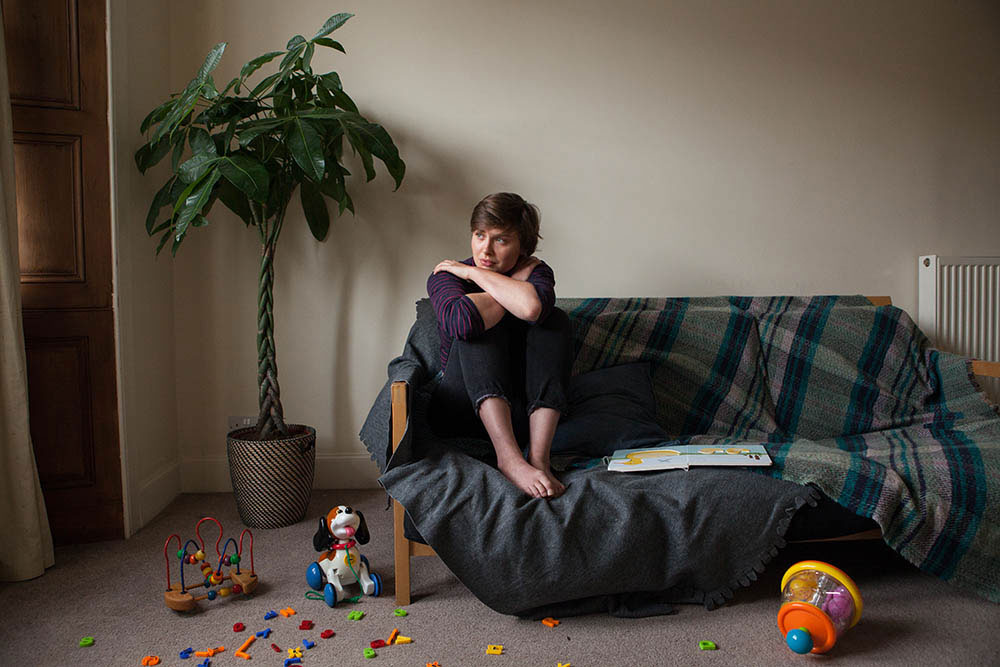
Photo copyright: Laura Dodsworth
There’s a reason the addresses of refuges are kept secret. By now it’s no shock to us abusive men will try to trace, follow, intimidate and harass partners and ex-partners, even to the very location that women and their children (if any) are trying to escape to. Far from being a suited stranger observing from a dark alleyway, the majority of cases of stalking are perpetrated by a partner or ex-partner. That is why Women’s Aid workers and other services who support women are well versed in creating safety plans and managing risk. It’s also why in partnership with media coop the Scottish Women’s Rights Centre is piloting an innovative mobile app for services to use to support victim-survivors to record their experience – more on FollowItApp soon.
Stalking – like most crimes – happens on a sliding scale of severity, but all abuse is serious. In many ways our culture gives permission for this behaviour, because ‘he just can’t take no for an answer’. This idea has become normalised – romanticised even – as typical masculine behaviour and an excuse for men to pursue women who have already said ‘no’, rather than evidence of entitlement and potentially abuse.
Stalking is a by-product of gender inequality, a society that gives men agency and power and denies it to women. It makes up one part of the epidemic of violence against women across the world, and like most crimes of violence against women, it often goes underreported.
The Scottish Women’s Rights Centre exists to fill the gap between women’s experiences of violence and abuse and their access to justice; a big part of what we do is supporting women to navigate legal systems and institutions to pursue justice. There’s no denying that Scots law is complicated and while there are lots of reasons why victim-survivors of stalking don’t report their experience to the police, something we’ve found at the Scottish Women’s Rights Centre is that this is because it just isn’t always recognised as criminal behaviour. On top of that there are practical challenges to recording an experience that can be incredibly intense and diverse.
In Scotland stalking is prosecuted as a course of conduct – this means an incident that takes place two or more times – that places another person in a state of fear or alarm. That means that non-criminal acts, for example sending a text message that says ‘why haven’t you left the house all weekend?’, become criminal and can therefore be reported when they happen twice or more and when they cause the victim to feel afraid. The above text could easily make someone feel afraid, because it’s meant to let them know that they are being watched.
Stalkers use a wide range of behaviours and tactics to make their victim afraid. This can include unwanted calls, texts, emails or messages and comments on social media. It can mean turning up unexpectedly, following, loitering and giving verbal abuse, with some stalkers installing monitoring software on their victims’ phones or laptops to track their every move. It can even include leaving unwanted gifts or cards in places where they shouldn’t be, behaviours designed to make sure the victim is aware and scared, but feeling powerless to do anything about it. It can be all of these things at once. To the outside world, a bunch of flowers on your desk means nothing, it could even be interpreted as a nice gesture, but in the context of stalking and domestic abuse, it’s quite the opposite and it can be overwhelming.
This is one of the reasons why we (in partnership with media coop) have created FollowItApp, something we hope will provide a digital solution to an age old problem. We want to make it as easy as possible for women to be able to record and evidence their experience through a creative log with options for pictures, screenshots, videos and notes. Those who use it might have no intention of ever reporting their experience of stalking to the police, or they might change their mind and choose to report five years later. We won’t tell women what to do with the information, we’ll just help store it in a way that is quick, convenient and safe. If a victim-survivor ever chooses to report their experience, having this information stored (for 15 years) could come in useful.
Being stalked is traumatic and it is terrifying; it’s virtually impossible to feel safe when you think that someone is watching your every move. Nobody expects to be stalked, or to have to report it to the police. It should never come to that, but unfortunately far too often it does. Recording incidents and their impact through FollowItApp is a helpful protective measure that means that if any behaviour does escalate, or if the victim-survivor changes their mind and chooses to pursue justice, then information is reliably saved and the course of conduct and its impact are much easier to demonstrate.
FollowItApp is currently in its pilot stage. If you are receiving support from or work at a local women’s aid or rape crisis centre and want to get involved in a project that will change the landscape for victim-survivors in Scotland get in touch: info@scottishwomensrightscentre.org.uk

