
Guest post by Emma Duffy, University of Strathclyde.
As part of my degree in MSc Applied Gender Studies at the University of Strathclyde, I have been conducting a research project for Scottish Women’s Aid, mapping the appearance of domestic abuse in Scottish news media. My findings will be shared through a series of blog posts, published on the Scottish Women’s Aid website and this is the first in that series.
Choose to Challenge
With the theme for this year’s International Women’s Day being #ChooseToChallenge, I felt it was the perfect opportunity to kickstart my blog series on the research I have been undertaking for Scottish Women’s Aid. It is important that we continue to challenge the myths around domestic abuse – an issue which overwhelmingly affects women – in Scotland. One way we can #ChooseToChallenge these myths is through responsible media reporting of domestic abuse, which has a significant influence on how domestic abuse is understood by the wider public.
Scotland has witnessed many progressive changes when it comes to domestic abuse. This has included legislative changes, such as the ground-breaking Domestic Abuse (Scotland) Act, which came into force in April 2019, and the Domestic Abuse (Protection) (Scotland) Bill, which is currently being debated in the Scottish Parliament. Yet, when it comes to representation of domestic abuse in the media, it could be argued that reporting is out-dated, unethical and misinformed about such legislations. Furthermore, if the reporting of domestic abuse utilises sensationalised or trivialising language, the media only reinforces the myth that domestic abuse is limited to physical violence.
My research
Over the past few months, I have been conducting a news monitoring project on domestic abuse in the Scottish news media. My search focussed on two key periods six months apart: April/May 2020 and October/November 2020. Although there has been previous reflections on the one-year anniversary of the Domestic Abuse (Scotland) Act, as well as the impact of reporting on violence against women during a global pandemic, my research looks at all coverage of domestic abuse during those two periods. I searched for three key terms on the Nexis database: ‘domestic violence’, ‘domestic abuse’ and ‘coercive control’, which resulted in 188 stories for April/May 2020, and 61 stories for October/November 2020. In line with the Global Media Monitoring Project’s (GMMP) coding guidance, I looked at various aspects of each story including the main topic, the scope of the newspaper, if the story was related to COVID-19 and who was quoted in each story.
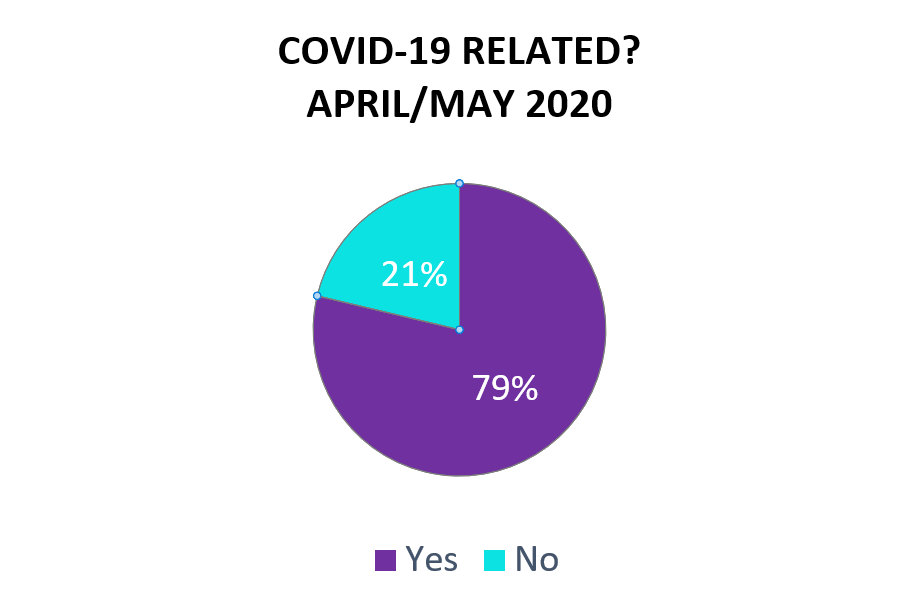
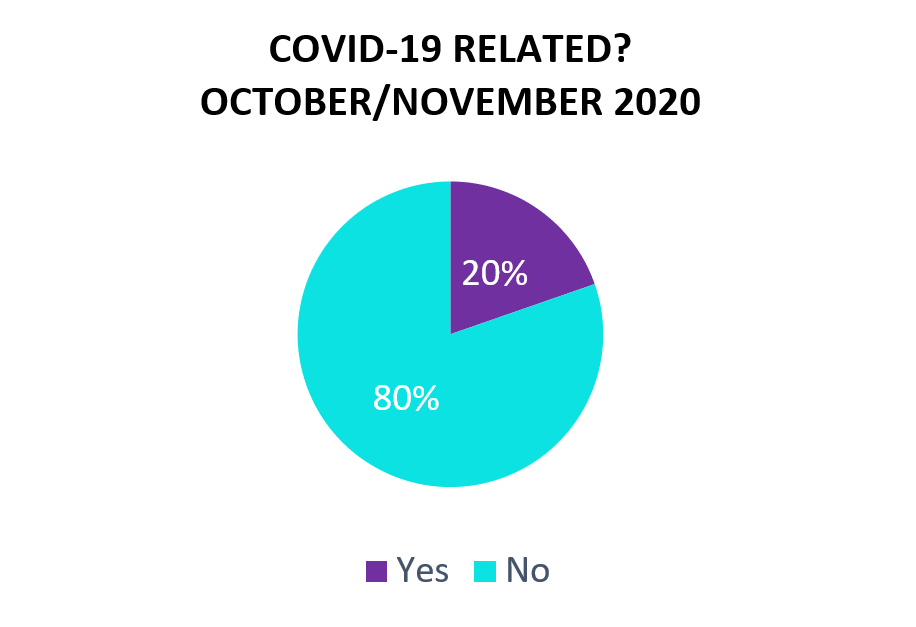
The results proved extremely interesting. Whilst there was almost three times the number of stories codes for April/May as October/November, perhaps unsurprisingly the overwhelming majority of these stories were related to COVID-19. As my findings show, 79% of stories coded in April/May were related to COVID-19, compared to 20% in October/November.
The COVID-19 pandemic, then, determined the coverage of certain topics, especially as the Scottish Women’s Aid press release at the beginning of lockdown accounted for the high percentage of Scottish Women’s Aid related stories in April/May.
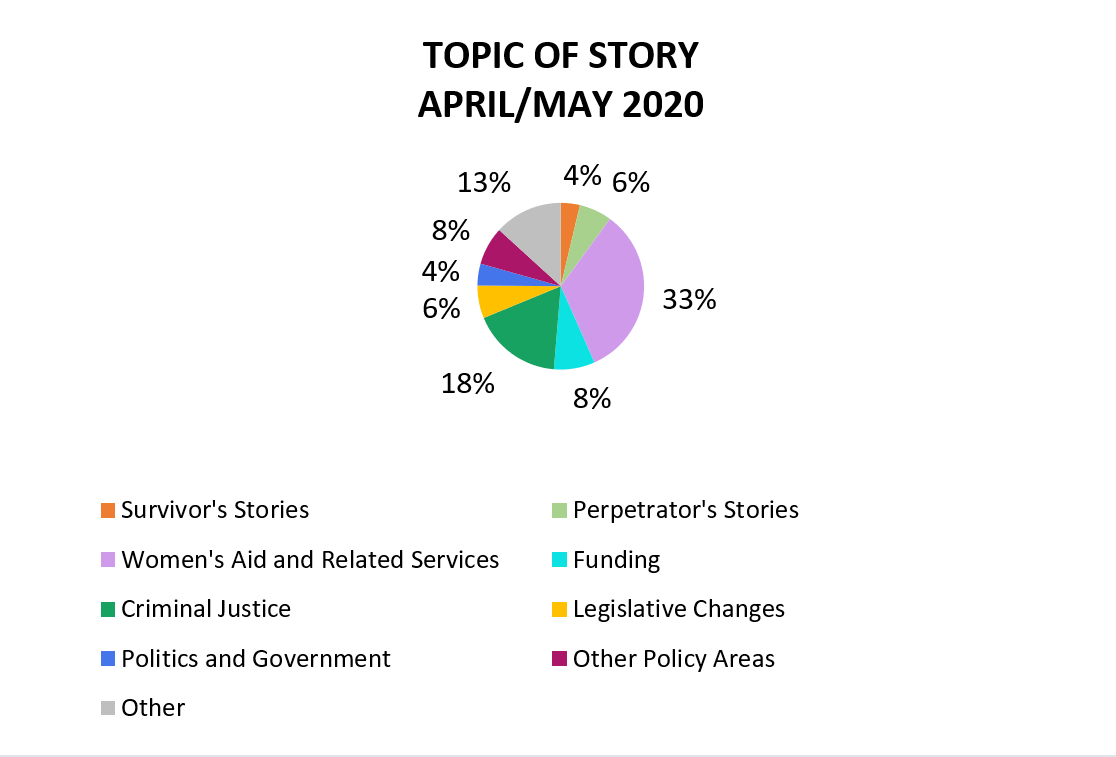
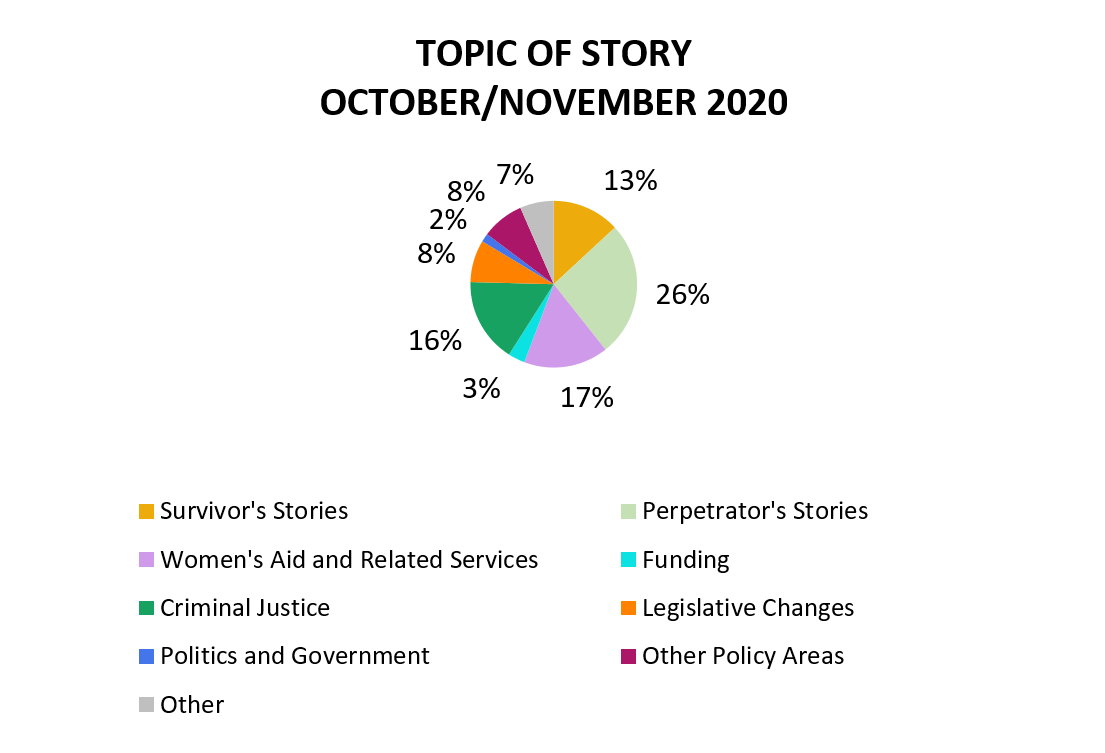
However, despite the high volume of stories relating to Scottish Women’s Aid, there was a shockingly low number of helplines included for women to seek support when required. I was also extremely disappointed by the small number of stories that were devoted to the experience of survivors.
Further analysis showed that women were underrepresented in professional positions quoted in each story. For example, in April/May, there were 36 male police officers quoted, compared to 16 female and 4 unspecified. In October/November, there were 7 male government officials quoted, compared to 1 female. This is reflected in the fact that currently only 46 out of 129 MSPs are female, and that only 30% of police officers in Scotland are women. Although there was a larger number of women quoted under the category ‘other’, this category included local charities that were not Scottish Women’s Aid services, as well as larger organisations such at The National Lottery and Morrisons supermarket. Because I could not include a category for every occupation that I encountered, I prioritised the main categories that will be relevant to my research.
Throughout my next two blog pots, there will be a focus on the use of language in the Scottish news media and how this reflects a shift in the understanding of domestic abuse. By including a more in-depth analysis of patterns and trends that have emerged during my research, I intend to investigate whose stories are being told, and how. But for now, on International Women’s Day, I invite everyone to #ChooseToChallenge the myths around domestic abuse. We must continue to break the misconception that domestic abuse is limited to physical violence and by recognising that risk is heightened by the pandemic, but that abuse is not caused by the pandemic. Not only is doing so crucial in improving the lives of women in Scotland, but also around the world.
Further information about how to improve your understanding of the dynamics of domestic abuse can be accessed via the Scottish Women’s Aid website.
If you feel scared of your partner or ex-partner, or if you are worried about someone you know, get in touch with Scotland’s 24-hour Domestic Abuse and Forced Marriage Helpline on 0800 027 1234 for support and information. You can also email and web chat from www.sdafmh.org.uk. There are translation and interpreting services available.
