

“Everyone should be aware of this, everyone can help.”
The knowledge that we can all play an important role in challenging inequality, discrimination and oppression is at the core of what the Equally Safe in Practice (ESiP) project aims to achieve; individual understanding and collective awareness that working towards gender equality, safety and wellbeing is everyone’s business, and a national priority.
Since summer 2021, ESiP has been working with eight local councils across Scotland to pilot and test the core modules of a national learning framework. As we approach the final few months of the pilot phase, we’re looking back at some of the key moments so far – and sharing some insights into what workers have learned and how perspectives have changed.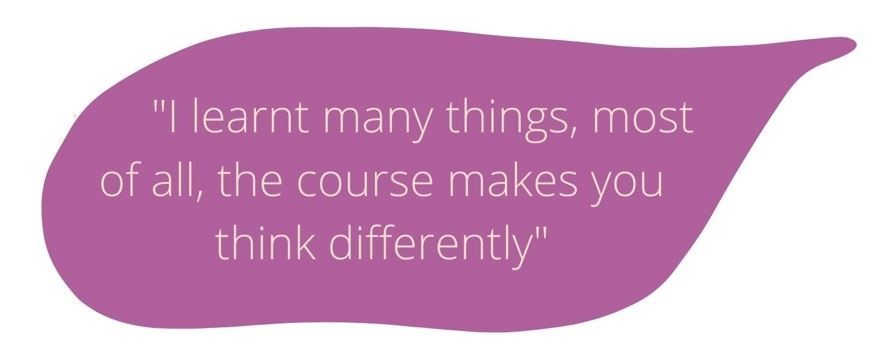
A whole range of staff teams and departments, from HR and housing right through to senior leaders, have been enrolled in three e-learning modules that will aim to increase their knowledge and understanding of gender equality and violence against women and girls (VAWG). Three learning modules – Together for Gender Equality, Understanding Domestic Abuse and Understanding Sexual Violence – have been developed in collaboration with a range of local and national partners from VAWG and equalities organisations, and they form the basis of the national learning framework.
So far, the pilot has been an interesting journey for councils as they have navigated the complexities of participating during the Covid-19 pandemic, and managed numerous competing demands. But there have been huge successes. Since the pilot launched we have seen a high volume of staff complete the foundation module Together for Gender Equality. Today, just under 1000 staff have enrolled and are on their way to completion.
The gender module is the bedrock of the wider framework and it offers a lens through which learners can better understand wider society, their organisation and their role. This module prompts learners to consider the ways in which power and privilege is relative to a person’s gender, as well as to other cross cutting issues such as ethnicity, class and disability. From here, learners are asked to consider what values and attitudes they need to bring to their everyday practice, and what are some of the practical ways they can make a difference, before moving on to complete the next two modules.
We’ve been asking pilot participants “What did you learn?” and have captured feedback about the key takeaways, how training has shifted personal outlook and opinions and in what ways they might use new learning to make a difference in the workplace. Below are some snapshots of what has been shared so far.
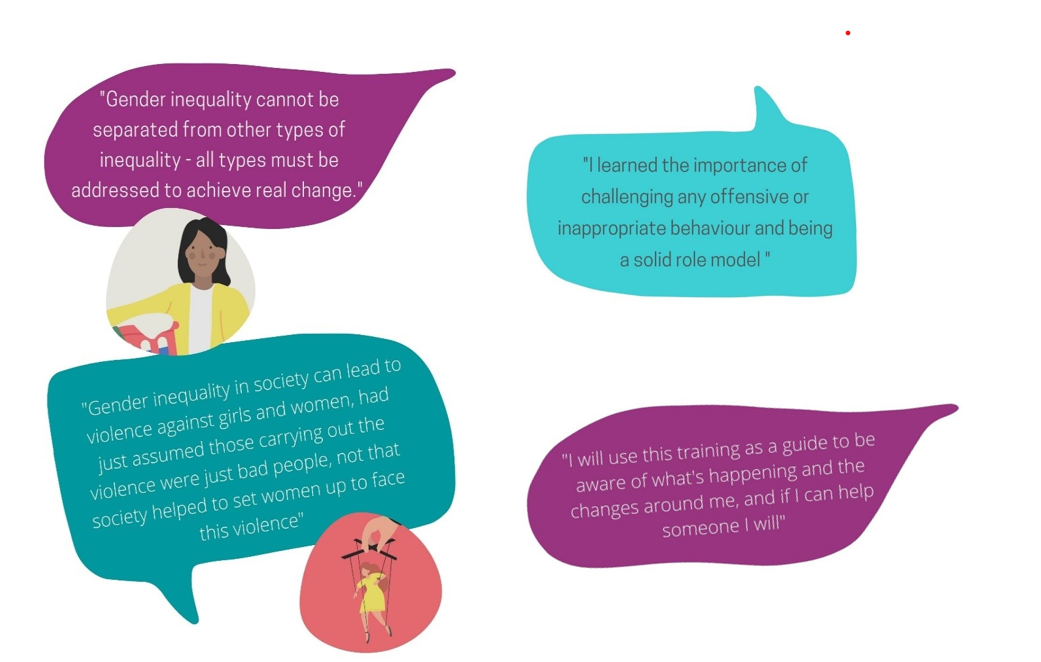
Learners reflected that the training had made them question their own outlook and had an impact on their overall attitudes about gender equality. The majority of learners felt the course helped them understand more about the impact that unconscious bias and gender stereotypes has on a society as a whole.

In their feedback learners also commented on what organisations and individuals can do in order to make a positive difference in the workplace, and wider society. Some of the examples covered better inclusion in the workplace and in recruitment processes, tackling occupational segregation, and a need to recognise how workplaces can often reinforce inequalities.
Over the next few months, councils will be piloting the next two modules, Understanding Domestic Abuse and Understanding Sexual Violence. Look out for the final pilot evaluation that will be shared this Spring!
