by womensaidscot17 | Apr 18, 2022 | Uncategorised
If you’re reading this, the chances are that you are concerned about someone you know. You might know they are experiencing domestic abuse or forced marriage, or be worried that they could be. It can be hard to know how best to support someone you care about, and this can leave you feeling stuck: worried about them, but unsure if or how you can support them. It can be easy to feel that there is nothing you can do – or the opposite – that you need to take immediate action to help.
Everyone’s situation is different, but below are some general principles for supporting someone who is experiencing or at risk of domestic abuse or forced marriage.
- If you’re not sure what’s happening, ask
It’s best not to make assumptions about what is happening, but to talk to the person that you’re concerned about privately, if at all possible. We understand that this can in itself be difficult, and that part of the reason you’re concerned may be that you have been unable to talk to them alone for a while.
If you get a chance to talk, it can be good to approach the conversation from a place of concern for them (rather than criticism of their partner). One way to approach it can be to mention any changes that you have noticed in them:
“I’m worried about you, you seem distant/ nervous/ less confident recently. How have things been? Has anything happened that you want to talk about?”
It can seem like a small thing, but opening up a conversation, giving the person space to talk, and reminding them that you care can be a powerful thing to do – especially if the person you’re talking to may be dealing with constant criticism from the abuser.
- Listen non-judgementally, and give reassurance
This might seem like an obvious one, but listening is crucial. It’s important not to minimise what they are saying (“all couples argue”), or to blame them for what is happening. Questions like “why don’t you leave?” or “why did you go back?” can make the person in question feel like they have done something wrong, when in reality the only person responsible for abuse is the person who is being abusive. Instead of these closed questions, try to ask open questions such as “what would you like to happen?”, and be guided by their answers.
It’s also important to reassure the person that they have done the right thing in talking about this. It can take a lot of courage to talk openly about abuse, and we often hear from victim/survivors that it has taken months or years to talk to someone about what they are going through. This can be for many reasons: safety concerns (for example threats that the abuse will get worse if they tell anyone); not knowing whether what is happening is abuse; fear that telling someone will lead to a specific outcome e.g. police or social work becoming involved; feelings of embarrassment or self-blame; previous bad experiences of telling someone; not wanting to be a ‘burden’.
- Check in with them regularly, if possible
Once someone has started to talk to you about abuse, one of the most useful things you can do is to keep the lines of communication open, as far as possible. Again, it is best to be led by them in terms of how/when to talk – this might be when they are at work, while their partner is out, while walking the dog, etc. If they think that their phone/computer are being monitored, consider options e.g. whether they could save your name under a pseudonym in their phone, giving them a spare/cheap phone that the abuser does not know about, or communicating on a work phone number/email if they have one.
- Empower the person to make their own choices
It can be normal to want the person you’re worried about to do something specific, e.g. to leave, or to phone the police. However, it is almost always* best to let them make any decisions about what happens next (if anything). They know their situation better than anyone else, and will be best-placed to assess the risks and potential benefits of any decision. We know that the time when someone leaves an abusive partner, or the period soon after they leave, is often a time of increased risk of harm for them – there are many reasons why someone may not want or be able to leave, even if these can be hard to understand from the outside.
* If someone is in immediate, life-changing danger, it is best to phone the police on 999.
- Gather information
One of the most useful things that you can do to support someone is to gather information on things they’re unsure about. This could be around their legal options – e.g. whether there is a way to have an abusive partner removed, or what can be done to prevent a forced marriage taking place – or around places that they can get more support (see below). Gathering this kind of information can be helpful as it both takes the burden of doing so away from the person experiencing abuse (at a time when they are likely to be exhausted and overwhelmed with managing their day-to-day situation) and it can be safer for them if for example their search history is being monitored.
- Help with safety planning
Safety planning can be as simple as agreeing a code word or timeframe for checking in, and what to do if they use the code word or you don’t hear from them within that timeframe. This will depend on what’s normal for both of you – for example if you would normally hear from them once a day, you could agree that if you haven’t heard within X amount of time you will take a certain action (checking on them if safe to, telling someone else, phoning the police).
If the person is thinking of leaving, it can be helpful to offer to keep things for them in case: you can offer to keep some spare clothes, copies of important documents, etc., so that they know you have these if they decide to flee at short notice.
There is detailed information about safety planning on our information pages, including advice for staying as safe as possible while living with an abuser, safety planning for leaving an abusive partner, and safety planning for anyone at risk of forced marriage either in the UK or abroad.
- Encourage them to seek professional support
Finally, an important thing that you can do is to encourage the person to get more support put in place. Our callers often tell us that they first heard about our service from friends or family, and that this is what prompted them to get in touch. It can be useful simply to let them know that they deserve support, and that there are services who are there to support them. You can find information about these and a range of other support services on our ‘Who Else Can Help?’ page.
We hope this information will be helpful – if you would like to talk any of this through, or get confidential advice on things like how to talk to someone about domestic abuse or forced marriage, what support they might need, and what you could do or avoid doing in order to support them, you can contact us at any time by phone, email, or web chat.
If you feel scared of your partner or if you are worried about someone you know, get in touch with Scotland’s 24 hour Domestic Abuse and Forced Marriage Helpline on 0800 027 1234 email helpline@sdafmh.org.uk or visit sdafmh.org.uk.

by womensaidscot17 | Apr 12, 2022 | Uncategorised
“Everyone should be aware of this, everyone can help.”
The knowledge that we can all play an important role in challenging inequality, discrimination and oppression is at the core of what the Equally Safe in Practice (ESiP) project aims to achieve; individual understanding and collective awareness that working towards gender equality, safety and wellbeing is everyone’s business, and a national priority.
Since summer 2021, ESiP has been working with eight local councils across Scotland to pilot and test the core modules of a national learning framework. As we approach the final few months of the pilot phase, we’re looking back at some of the key moments so far – and sharing some insights into what workers have learned and how perspectives have changed.
A whole range of staff teams and departments, from HR and housing right through to senior leaders, have been enrolled in three e-learning modules that will aim to increase their knowledge and understanding of gender equality and violence against women and girls (VAWG). Three learning modules – Together for Gender Equality, Understanding Domestic Abuse and Understanding Sexual Violence – have been developed in collaboration with a range of local and national partners from VAWG and equalities organisations, and they form the basis of the national learning framework.
So far, the pilot has been an interesting journey for councils as they have navigated the complexities of participating during the Covid-19 pandemic, and managed numerous competing demands. But there have been huge successes. Since the pilot launched we have seen a high volume of staff complete the foundation module Together for Gender Equality. Today, just under 1000 staff have enrolled and are on their way to completion.
The gender module is the bedrock of the wider framework and it offers a lens through which learners can better understand wider society, their organisation and their role. This module prompts learners to consider the ways in which power and privilege is relative to a person’s gender, as well as to other cross cutting issues such as ethnicity, class and disability. From here, learners are asked to consider what values and attitudes they need to bring to their everyday practice, and what are some of the practical ways they can make a difference, before moving on to complete the next two modules.
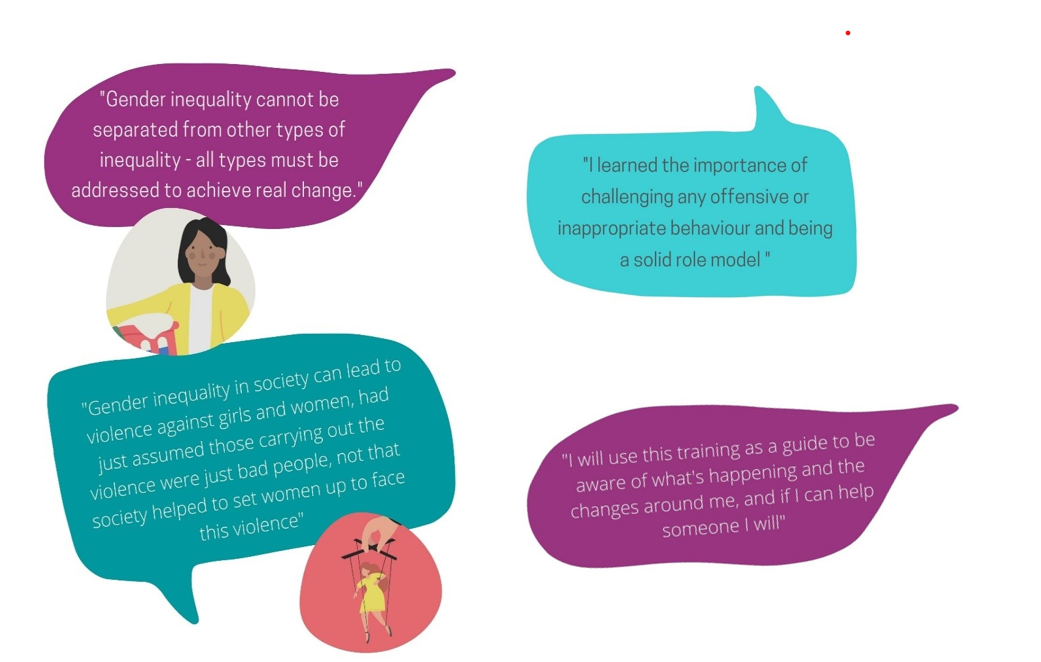
We’ve been asking pilot participants “What did you learn?” and have captured feedback about the key takeaways, how training has shifted personal outlook and opinions and in what ways they might use new learning to make a difference in the workplace. Below are some snapshots of what has been shared so far.
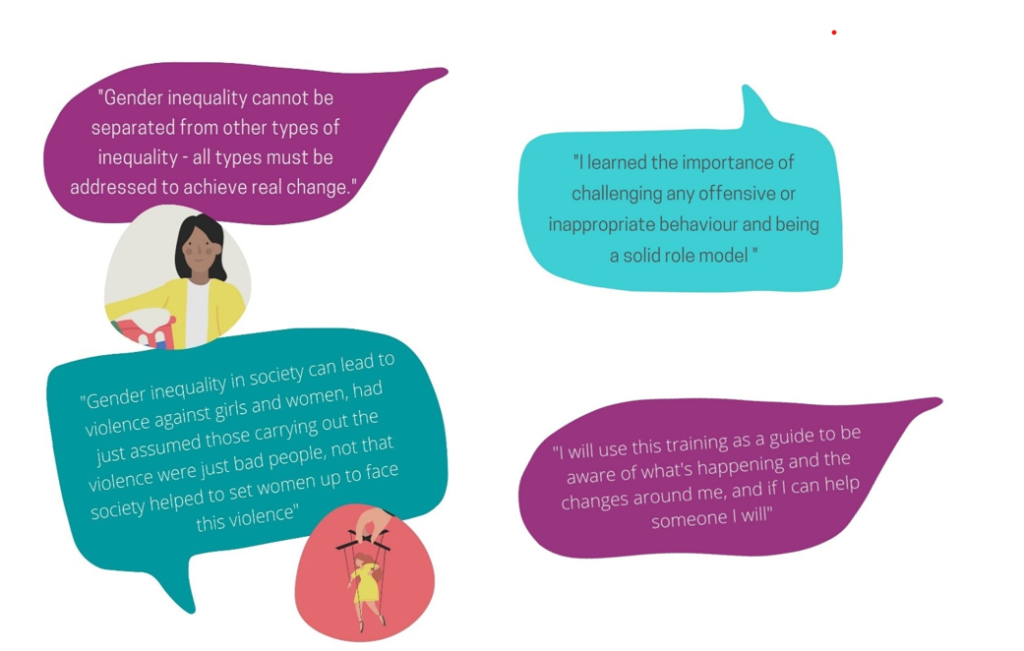
Learners reflected that the training had made them question their own outlook and had an impact on their overall attitudes about gender equality. The majority of learners felt the course helped them understand more about the impact that unconscious bias and gender stereotypes has on a society as a whole.

In their feedback learners also commented on what organisations and individuals can do in order to make a positive difference in the workplace, and wider society. Some of the examples covered better inclusion in the workplace and in recruitment processes, tackling occupational segregation, and a need to recognise how workplaces can often reinforce inequalities.
Over the next few months, councils will be piloting the next two modules, Understanding Domestic Abuse and Understanding Sexual Violence. Look out for the final pilot evaluation that will be shared this Spring!

by womensaidscot17 | Jan 21, 2022 | Uncategorised
Branding brief
Scottish Women’s aid (SWA) is commissioning a piece of branding work from a young woman designer (trans women included), on behalf of the Women’s Aid network. The work will be done in collaboration with and led by Young Women Rise.
Young Women Rise are a research and digital campaign group led by 10 empowered diverse young women from across Scotland supported by SWA and YWCA Scotland – The Young Women’s Movement. This group have come together to research young women’s experiences of unhealthy relationships, domestic abuse and access to support.
The brand:
We need a brand toolkit to enable Women’s Aid groups to promote their support services to young women (aged 12 to 25) who are in abusive intimate relationships.
The brand will need to be highly adaptable: there are 34 Women’s Aid groups in different local authorities across Scotland that are all SWA members. Groups will decide whether and how they will use this brand toolkit to promote their services locally. This means the brand will need to be adaptable, in order to allow each group to tailor it to local needs.
The brand will be based on Young Women Rise’s brief, so the successful applicant will be expected to participate in brainstorming and development workshops with Young Women Rise.
Who we are looking for:
SWA is an intersectional feminist organisation dedicated to person-centred, participative and inclusive practice. This project will need to be conducted in a manner that aligns with and reflects these values.
This work will need to be delivered by and for young women, so we are looking for a young woman (trans women included) designer (under 30 years old).
You will be expected to attend some meetings with SWA and YWCA, as well as facilitated discussion sessions with Young Women Rise (maximum of 4×2 hour sessions). You will develop several branding options based on these discussions. Young Women Rise will then choose their preferred option, which you will refine based on their input.
Deliverables, timescales & Remuneration:
The brand toolkit will need to include the below, made in Canva templates to allow groups to edit and use with ease:
- A brand name
- Organisation logos in required various formats
- Brand guidelines (including how to edit/modify the brand)
- A slide deck for presentations and training (Powerpoint and Canva)
- Customisable social media templates for different platforms (Facebook, Instagram, Twitter and Tik Tok)
These will need to be ready to be presented to SWA (i.e. completed and signed off by Young Women Rise) by mid-April.
There I up to £5,000.00 available for this work.
How to apply:
Please send the following to gabrielle.blackburn@womensaid.scot by midnight on Wednesday 9th February:
- A portfolio or website showcasing your work
- A short cover letter explaining why you would like to take on this work, and outlining your relevant previous experience (be that through personal, professional or voluntary work)
- An estimated quote for your fees (there is up to £5,000.00 available for this work)

by womensaidscot17 | Jan 13, 2022 | Uncategorised
17th December 2021
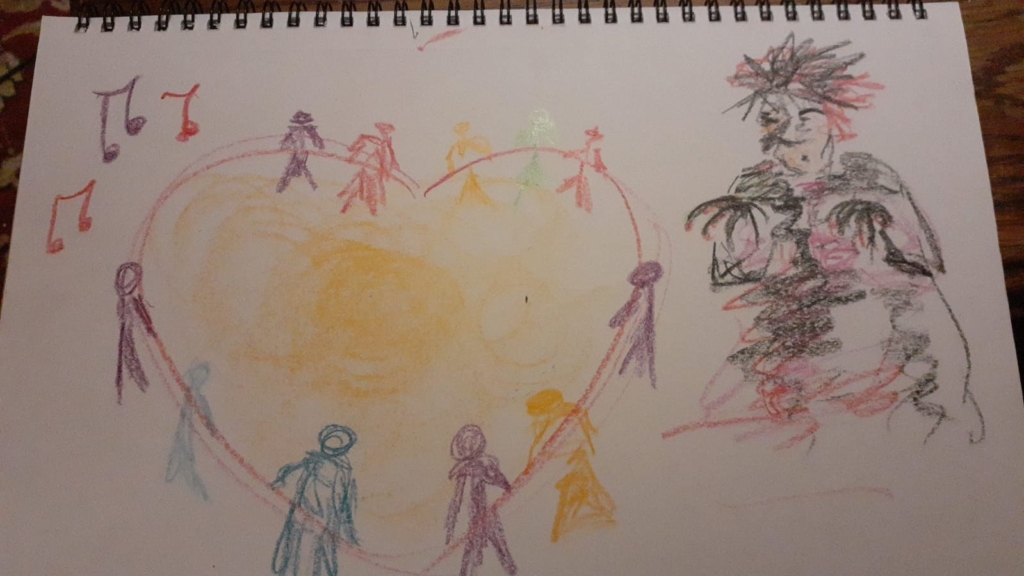
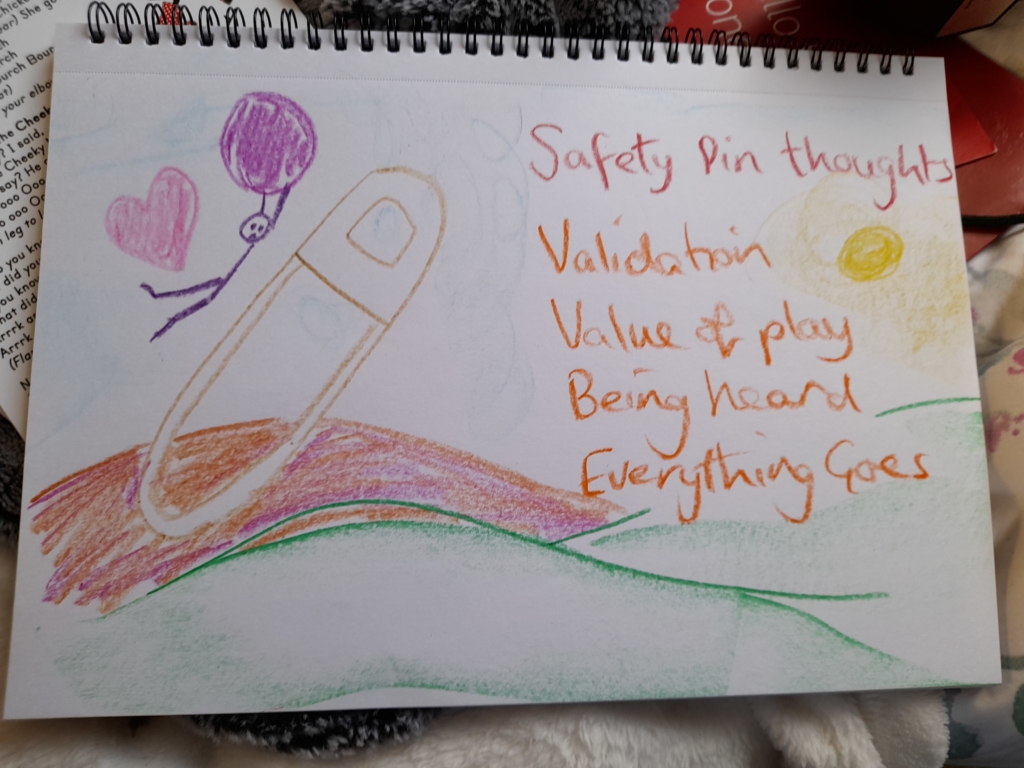
In 2020, Scottish Women’s Aid (SWA) approached Licketyspit to explore a collaboration: ‘When I heard more about Licketyspit all I could think about was how few tools we’ve had (in WA) based on joy and play and love and excitement and art and music and all of the thing to allow us to express emotions and not only get them out but also share them in a really meaningful way with the people we love.’ Marsha Scott CEO SWA
In Feb 2021 Licketyspit introduced Storyplay to 30+ Women’s Aid Workers – who immediately understood how they could use this imaginary play-based approach and methodology – “(Storyplay is) a great way to create empathy and connect with a child …who may be unable to understand their feelings & responses / (of) helping Mums and children build a shared experience and address difficult issues” Women’s Aid Workers Feb ‘21
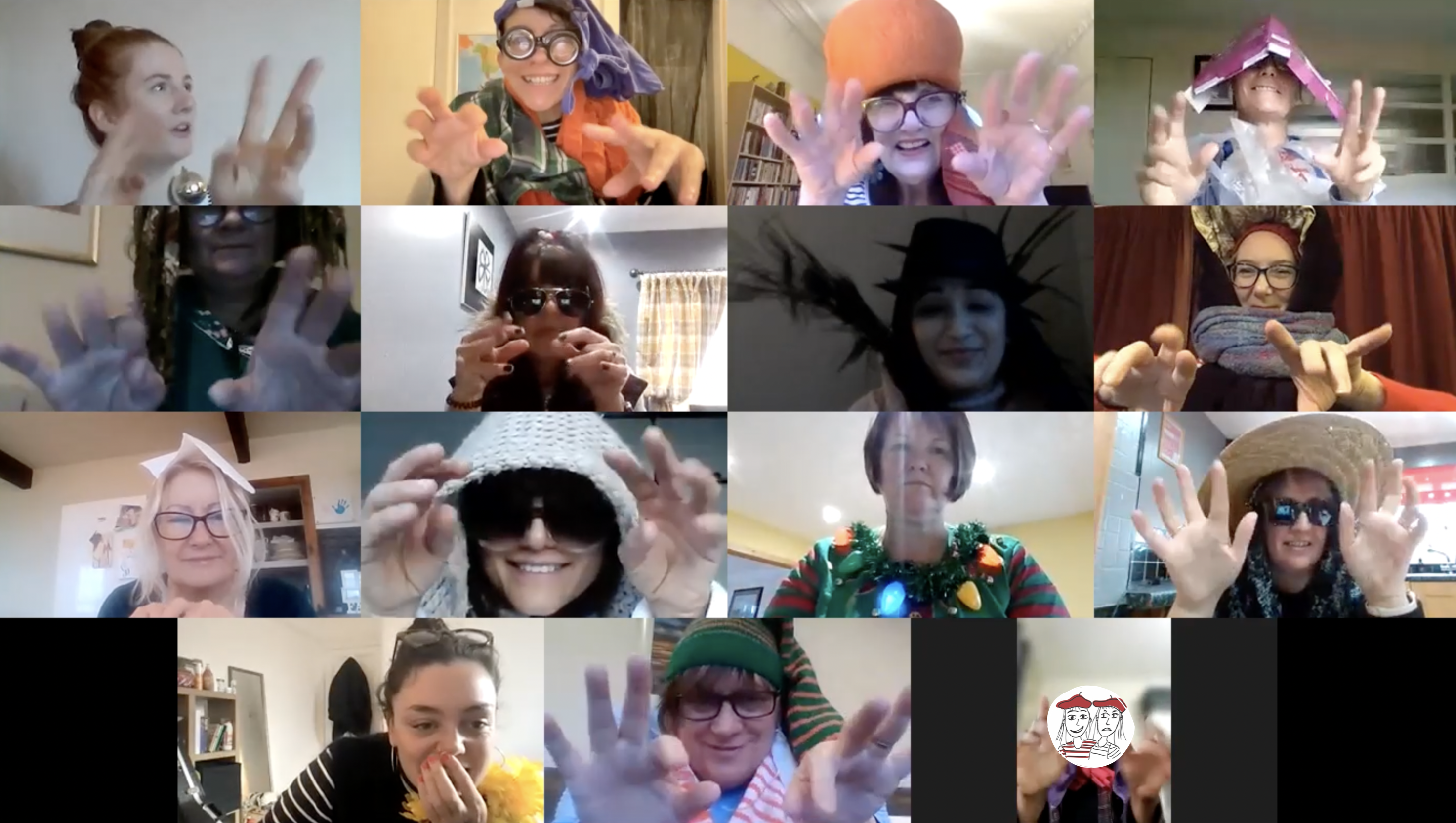
SWA approached Scottish Government to support an innovative collaboration between Scottish Women’ Aid and Licketyspit. Last week the first Women’s Aid workers –from Wigtown to Shetland – completed an intensive 5-week online Licketyspit Storyplay Training programme – with flying colours!
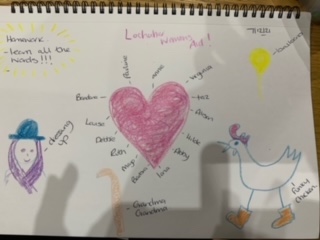
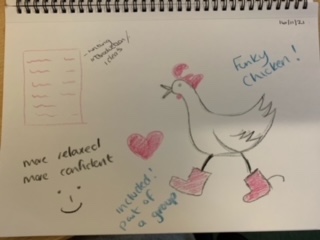
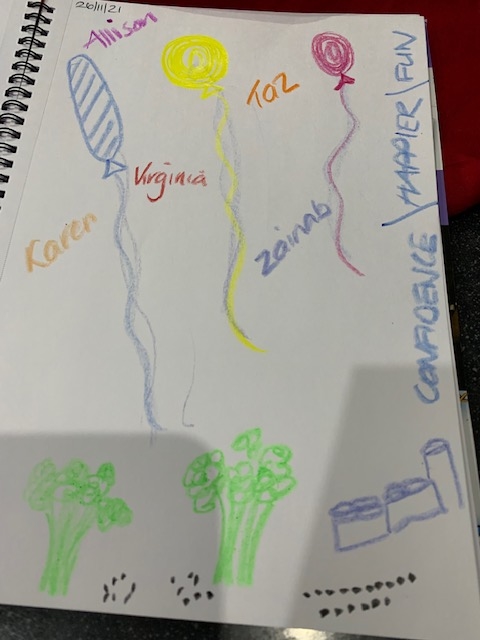
Storyplay is not as easy as it looks. Learning to facilitate it is to embark on a journey of learning, self-reflection and bold experiment! The WA workers all described a similar experience, initially feeling out of their comfort zone, nervous and self-conscious, then increasingly relaxing and gaining in confidence. ‘At the beginning of the sessions I felt really quite scared… But I think we’ve all just coped really well with it. It’s really nice to see everybody’s confidence growing’. WA Storyplay Trainee’21
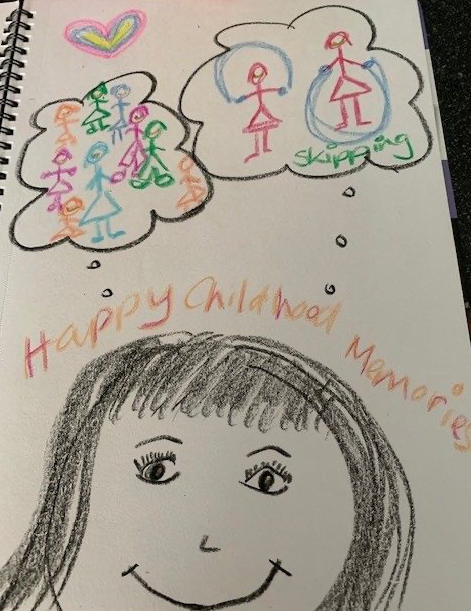
Taking play seriously in theory, as increasingly children & family professionals do, is different from being asked to play as an adult in practice, with your peers, and make it a core part of your engagement with children. Storyplay – which is often ‘silly’ & hilarious – can at first feel counter-intuitive as your ‘job’. Storyplay training demands reconnecting with your ‘playful self’, revisiting memories of childhood play, learning to relax and take risks, immersing yourself in shared improvisations where you can “be anyone, go anywhere do anything!” while simultaneously unpacking how Storyplay works and what experiencing it can mean.
Storyplay is a rigorous practice. Facilitators need strong foundations. Few adult professionals other than actors are required to learn scripts! But word-perfect play-scripts, songs and rhythms free the Storyplay facilitator to read the room and attend to the multiple needs of a diverse intergenerational group, to think on their feet and adapt, for only then does this work become, as it consistently does, utterly irresistible and foolproof.
But Storyplay is a powerful deeply human emotionally engaged way of people being together which is as therapeutic to learn to lead as it is to experience –‘I think it’s just such an untapped thing we have like, playing and breathing and…it’s such an untapped resource we don’t use!’ WA Storyplay Trainee’21
‘I think you can really go into your imagination and you can go anywhere with it, there’s no limits!’ WA Storyplay Trainee’21
Storyplay is anchored in reciprocity, equality, fairness. The idea that everyone is creative and has something equally great to bring to the ‘game’. Our rock-solid belief is that we all need what children need – to know we are seen, heard, valued and included. Everyone wants and needs to play because playing with others is essentially about belonging – to your family, your community, society. The feelings we experience through Storyplay are real feelings! We are free to relax and enjoy being and exploring ourselves and our amazing collective imaginations.
The value of intergenerational drama-led play or as we call it – Storyplay – is not yet fully recognised. What we see happening among the parents & children we play with, is that in a safe nurturing inclusive space, we can enable Storyplay to be a catalyst for all of our participants to overcome barriers to full participation, to relax and increasingly nurture themselves and each other; to build their self-esteem, confidence, social skills and strengthen their relationships.
As actor-pedagogues, we know that everyone wants to be included and storyplay with us – even when it might appear otherwise. ‘Play’ as a word and an activity is not given enough weight as a therapeutic tool away from the world of therapists. Many adults have let themselves be persuaded they are not ‘creative’ or ‘good’ at drama. But when we talk about children’s rights and needs and accept how vital play is for every child, we must surely enable and support every children’s professional – and parent – to become a Play Expert. The wonderful thing is that this is easily within all of our reach. We adults have all been children! Storyplay is about reconnecting with our playful selves. And like exercising a muscle – it’s about practice.
‘I felt lucky, happy, grateful and energised! Also, couldn’t help thinking about future possibilities.’ WA Storyplay Trainee’21
Block Two Women’s Aid Storyplay starts in January when WASP Trainees working alongside Licketyspit actor-pedagogues will begin the first Storyplay deliveries with parents & children and a new co-hort of Women’s Aid workers will begin to train in Storyplay!
Click below to go to the family page about Storyplay online sessions with Women’s Aid and Licketyspit.
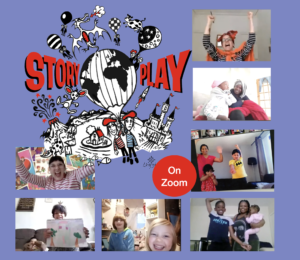
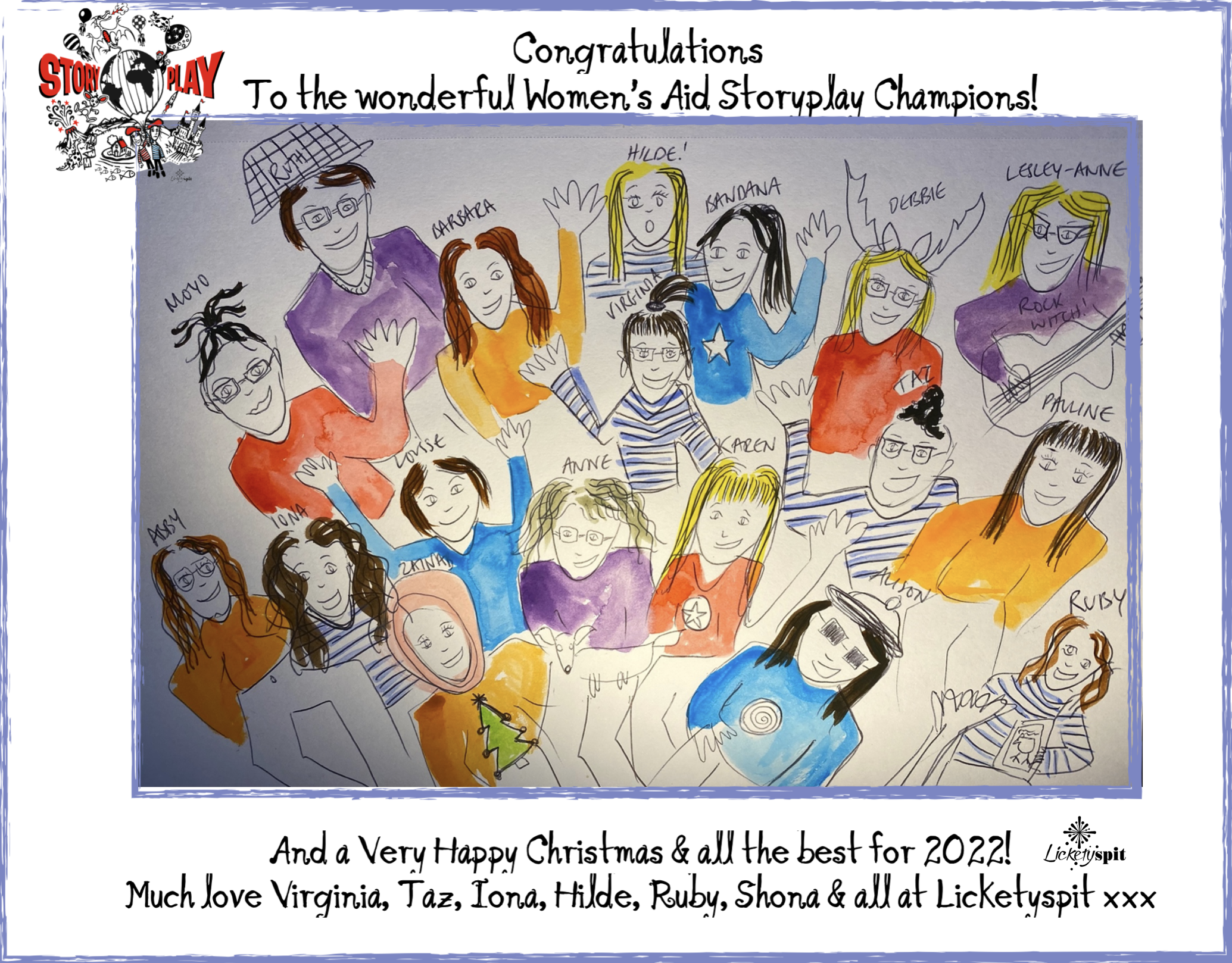
Your Storyplay Champions!

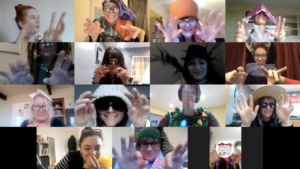
‘Marsha (CEO SWA), I can only begin to tell you how amazing this has been & how bold, funny, hard-working and insightful we have found your workers. Really willing to push themselves beyond their comfort zone to work in a totally new way. It’s been an absolute joy to work with them see them grow & develop and relax & absorb Storyplay. To have people doing such serious work taking play this seriously is both radical and exciting.’
Virginia Radcliffe, Actor-Pedagogue 2021
‘Through sheer empathy, understanding and will, they have allowed their playfulness to take a front seat. And what a joy to bear witness to it!…. I cannot wait …to play and share this joy not only with the courageous WA women, but with the children and grown-ups they know, support and care about.’
Itxaso Moreno, Lead Actor-Pedagogue 2021
‘The most significant thing I’ve taken from working with Women’s Aid is that given the right support, guidance and encouragement – Storyplay truly holds magic for everyone, whatever their background, age or life experience.’
Iona Zajac, Lead Actor Pedagogue Dec 2021
‘When I was a kid in school I founded quite hard to play with other children …I think if I could have gone to Licketyspit sessions when I was a kid it would have really helped ….I just think that’s such a wonderful kind of gift that you (Women’s Aid groups) are going to be passing on to others …to find that playfulness and to find that joy and get in touch with themselves and others.’
Hilde McKenna, Actor-Pedagogue 2021
‘If we can have so much fun with what we got it’s gonna be so fantastic to bring this out for the women and children who we support because I think that’s what they need in their lives’
WA Storyplay Trainee 2021
by womensaidscot17 | Dec 8, 2021 | Uncategorised
2021 marks the 30th anniversary of the UN global campaign 16 Days of Activism against gender-based violence and the theme this year focuses on femicide.
Femicide is generally defined as the murder of women because they are women. And so, thinking about femicide, we cannot forget those women who have been victims of honour killings and honour-based abuse.
It got me thinking about how nuanced this form of abuse is and how many young people might not know what honour-based abuse looks like. Even though I specialise in ending violence against women issues through my work at Amina-the Muslim Women’s Resource Centre, that doesn’t mean I have all the answers and I am by no means an expert. But the more exposure and experience I’ve gained, only highlights to me how important it is we talk about honour-based abuse.
Honour-based abuse results from a woman being perceived as bringing shame or dishonour to her family based on her acting against, or breaking a code of behavior, that women in her household or community must follow. As a result, she may be punished. It differs quite a lot from other forms of abuse like domestic abuse, because it can involve multiple perpetrators. For example, the punishment might be discussed by multiple people, including immediate and extended family members and even community members. Honour-based abuse is a way to control and punish women for their choices, to restrain and restrict them from living their lives, to exercise power and control over them.
It’s important that we don’t make any assumptions about honour-based abuse, nor that we stereotype any communities or ethnicities. It occurs across a wide range of ethnic groups and genders. However, what we do know is that it disproportionately impacts women, and particularly women from BME communities.
With a lack of statistics and evidence relating to honour-based abuse or honour killings, it often is hidden and therefore it is even more important that we as a society need to pay more attention. We need to reach more young people, to educate them so that they can identify honour-based abuse and so that they know what help is available to them, should they want it. We talk about it as a theory, a concept. But unless we show people in a tangible way what to look out for – the subtleties of it – we aren’t likely to understand it, pick up on it, nor see any positive change.
When I worked in schools, I often saw BME young people disengage slightly from discussions around healthy relationships. This could be because they felt the subject wasn’t relevant to them until they marry, or they couldn’t be seen to engage in those types of discussions, especially if they were in a relationship. There can be so much shame attached to romantic relationships that take place out with marriage. Being Pakistani myself, I never received adequate sex or relationship education at home. The most we received in school was “as a girl, you’ll have a period. And if you don’t have a period after having sex, it means you’re pregnant”. Then at home, we weren’t allowed to talk about it. I couldn’t even mention the word ‘period’ in front of my family, and it was considered shameful to talk openly about periods in front of the men in the household. In Urdu, there are several phrases to indicate you are on your period without saying the word. For example, some people would say that ‘guests have arrived’ rather than saying ‘periods’ in front of their mum, and there would be no mention of these ‘guests’ in front of their dad. Even during Ramadan, you can’t keep fasts if you’re on your period. And if you were seen to be eating in front of the men in the house, then that was a clear indicator that you were on your period. So, you had to hide the food you would eat while everyone else was fasting. With this level of shame attached to women’s health, it’s no wonder survivors don’t talk about abuse they’ve experienced or disclose to anyone around them.
Often in BME communities, sex or relationships aren’t allowed to be discussed, especially amongst women. Sex can be seen as a dirty and shameful thing to even allude to let alone talk about. And relationships are just something that you’ll understand and naturally navigate your way through when you get married. End of. No warning or education around abuse or gender-based violence. No information around what healthy, respectful relationships should look like and how to be a respectful partner yourself. Nothing whatsoever. And even though we’re in 2021, this is continuing. This harmful silence is still damaging young people. So, when this culture is something your surrounded with, how can a young person understand honour-based abuse, notice it when it happens or reach out for help? You can’t.
The importance for me in this work is to highlight to young people that services are there to support them, and that we understand. We understand the things that they know deep down but don’t know how to articulate. The things that they’ve never had the space or confidence to say. Honour-based abuse has such a coercive nature about it. Its centres around subtle forms of manipulation and abuse for families to ensure that person does what they are told. Just like when we talk about how an abuser doesn’t ‘look’ like what we imagine an abuser to look like, the same goes for honour-based abuse. It’s not always as cut and dry as we think it is. The control can be exercised through things like being called slut for wearing false nails, which was what happened to Shafilea Ahmed. Shafilea’s mum called her a slut for wearing false nails and dying her hair. Her parents killed her when she was 17 for refusing a forced marriage.
One other important difference to note about honour-based abuse compared to other forms of abuse, is that within such communities, there’s almost a network which enables and perpetuates the abuse. I mentioned that honour-based abuse involves multiple perpetrators, but what complicates this even further is that these networks can cross borders. Women have fled the abuse, and still been traced. They’ve been murdered by family friends or other members of the community as the hands of the abuser(s). Anita Gindha travelled from one end of the UK to the other to flee her family and a forced marriage, married someone she fell in love with and chose to marry and was still tracked down 2 years later and murdered by someone her family had hired.
These are all the things that make honour-based abuse so nuanced, which in turn makes it so important for us to be able to understand it, raise awareness about it and stand up for change. Eradicating the abuse may seem out of our reach but the first step to that is sharing this knowledge with others. With those at risk of suffering from it. With those who have the ability to help victims of it. And if there’s one thing I’ve learned whilst working in violence against women, it’s to never force information or support, but to guide and gently encourage. It’s to seek out and listen to lived experiences, rather than make assumptions, when we have no lived experience of it ourselves. It’s to meet survivors at their own level, at their own pace and truly support them, rather than just perpetuating the abuse again and again and assuming we know what’s best for them.
For this reason, Amina MWRC decided to host Say Her Name, a candlelight vigil to commemorate the victims of honour based killing on the last day of at the 16 days of action, Friday 10th December in Glasgow. Sadly, there will be women who don’t get accounted for, who’s deaths go missed as being honour based killings. But we wanted to raise awareness, tell some of these women’s stories in an exhibition and highlight the need for change. We’re lighting candles and having reflection and prayers for these women. They aren’t just a statistic; these are real women who have been killed in the name of ‘honour’. Find details of the event and a flyer here.
Rabia Roshan is a Violence Against Women and Girls Development Worker for Amina, the Muslim Women’s Resource Centre. Amina is an award-winning organisation, recognised by Muslim communities and key partners within Scotland for its pioneering and responsive approach to addressing key issues and needs of Muslim women. Their helpline service is open Monday to Friday, 10AM – 4PM on 0808 801 0301.
Rabia was part of the team of community groups that consulted on the creation of our new animated advert for Scotland’s Domestic Abuse and Forced Marriage Helpline. The advert has been created for and shaped by survivors of forced marriage – keep an eye out for its launch on Friday 10th December on our social media pages.
Some survivors face more barriers to seeking support – another reason to advocate for needs-based funding structures. This #16Days, join the Women’s Aid network across Scotland in calling to decision makers for change. Sign our open letter.
#SWA16Days
If you feel scared of your partner or if you are worried about someone you know, get in touch with Scotland’s 24 hour Domestic Abuse and Forced Marriage Helpline on 0800 027 1234 email helpline@sdafmh.org.uk or visit sdafmh.org.uk.