
by womensaidscot17 | Apr 18, 2021 | Uncategorised
Content warning: this blog contains descriptions of stalking and abuse. Please read with care – information on accessing help and support can be found at the bottom of this blog post.
In popular culture stalking is often portrayed as a scenario where a stranger becomes obsessed with a celebrity, or with someone else they don’t know, and begins following and watching them. It can be shown to be a ‘romantic’ behaviour, symptomatic of men just not giving up on women they want to be with – even if those women have already told them ‘no’. These are dangerous myths about stalking that do nothing to tackle the problem.
Stalking is not romantic – it’s about male sense of entitlement and control.
It very rarely involves strangers becoming obsessed with someone they don’t know; most victims know their stalker and in fact stalking very often starts in relationships. We know that most stalking happens in the context of domestic abuse, and happens both during a relationship and can continue after it has ended. It’s part of the pattern of domestic abuse and, like all gender-based violence, it’s a result of gender inequality
The experience of constant surveillance and monitoring is a familiar one to anyone affected by domestic abuse and the purpose of it is for an abuser to maintain control over their victim by letting them know they are being watched, and making sure they feel afraid. Yet another tool of coercive control – to experience stalking is to live in constant fear.
From the outside, some of the behaviours typical of stalking can seem caring, or even attentive: he constantly calls her at work, messages and texts her relentlessly though the day, turns up repeatedly and unexpectedly to drive her home from social events, or leaves flowers and gifts on her door step. Abusers will be very manipulative in portraying their behaviour as innocent But in the context of domestic abuse, these are behaviours intentionally carried out by the perpetrator to overwhelm the victim, to constantly keep them on edge, and to limit their freedom.
We know that these surveillance and monitoring behaviours don’t end when a relationship ends – indeed they can sometimes ramp up. Abusive men will try to trace, follow, intimidate and harass partners and ex-partners even to the very locations that women and their children are trying to escape to. This is why the addresses of refuges are kept secret and why Women’s Aid services take so much care in helping women with safety planning.
Friends and neighbours can be unwittingly used to gather information and even children are not safe from this abusive behaviour as perpetrators have no qualms about using children to monitor women’s movements. Technology, from use of tracking devices on cars, installing monitoring software on a woman, or child’s phone or laptop, to cyber and social media abuse has also helped to make stalking easier, providing perpetrators with new and innovative ways to monitor, control and harass their partners or ex-partners.
In Scotland, stalking is a course of conduct crime – an incident that happens two or more times, and places another person in a state of fear or alarm. This means that those things like phoning or texting you a lot, or leaving unwanted gifts, or showing up at your home, office or children’s school which might not otherwise be criminal behaviours, may become criminal when they happen twice or more and when they cause you to feel afraid.
We know that COVID-19 and associated lockdown measures have offered abusers increased opportunities for surveillance and monitoring, and that the past year has been incredibly difficult for women living with stalking and abuse. If you are experiencing this and you want support, we are here for you.
Scotland’s Domestic Abuse and Forced Marriage Helpline is available 24/7 on 0800 027 1234 or via email and web chat at www.sdafmh.org.uk. You can also reach out to your local Women’s Aid service – our 36 expert services across Scotland have decades of experience in supporting women and children who have experienced stalking from abusive partners or ex-partners, and they can help you with practical, safety planning and emotional support. If you do want to report your experiences to the police, we can also offer support around that.

by womensaidscot17 | Mar 29, 2021 | Uncategorised
Do you want to get involved in making Scotland a happier, safer place for young women? Are you interested in learning more about feminist research? Would you like to a shape an exciting national digital campaign? If yes, this advisory panel opportunity is for you!
We want to understand where young women and girls look for support and advice when they are faced with abuse from someone they are in an intimate relationship with, and how Women’s Aid can help them in that situation.
Who can apply: You must be a woman (cisgender, transwoman, gender non-binary or gender non-fluid person) between the ages of 16 and 25. We would particularly love to hear from young BAME women, young LGBTQI women, disabled young women, young women living in rural areas, and young women from other minoritised groups.
Pay: Panellists will be paid £10/h and will be required to attend six 2 hour meetings. You can find out more about the work by reading the recruitment pack available here.
How to apply: You can download a copy of the application form here.
Please send the completed application form to Elena Soper, elena@ywcascotland.org by 12noon on 22 April. If shortlisted you will be invited for a short (digital) interview with us on 28 April.
It is important to us that this research and campaign represents the young women in Scotland and we don’t want the application process putting you off joining us. So if you need extra help applying, get in touch, we can support you!
by womensaidscot17 | Mar 26, 2021 | Uncategorised
Guest post by Emma Duffy, University of Strathclyde
As part of my degree in MSc Applied Gender Studies at the University of Strathclyde, I have been conducting a research project for Scottish Women’s Aid, mapping the appearance of domestic abuse in Scottish news media. My findings will be shared through a series of blog posts, published on the Scottish Women’s Aid website. This is the second in that series, and my first post can be found here.
Content warning: this blog post contains links to news coverage of men’s violence against women that is at times graphic. Please read with care – information on where to find support is listed at the end of this blog.
Helplines
You might not think it’s important to include domestic abuse helplines at the end of a story. They can be found on google. They can be found on the Scottish Women’s Aid website. They can be found anywhere; you just have to look. So, many deem it redundant to include helplines in news reporting as they are readily available elsewhere.
However, it’s crucial that helplines are made easily accessible for women who may recognise that they, or someone they know, are experiencing domestic abuse, and media reports which touch on these issues can provide an important resource. Additionally, women who have previously experienced domestic abuse may find news articles on other women’s experiences of abuse triggering or upsetting, and so signposting those women to sources of help is equally important. Scottish Women’s Aid encourage responsible media reporting of domestic abuse following the media guidance produced by Zero Tolerance. Information of various domestic abuse helplines are provided for journalists to copy and paste direct to news reports – it’s that simple.
My Research
Throughout my research, I have identified where domestic abuse helplines were being included in Scottish news media. The results found that more than a quarter of the 249 stories I examined overall did include helplines (n=64), a step in the right direction. This varied over the two key periods researched:
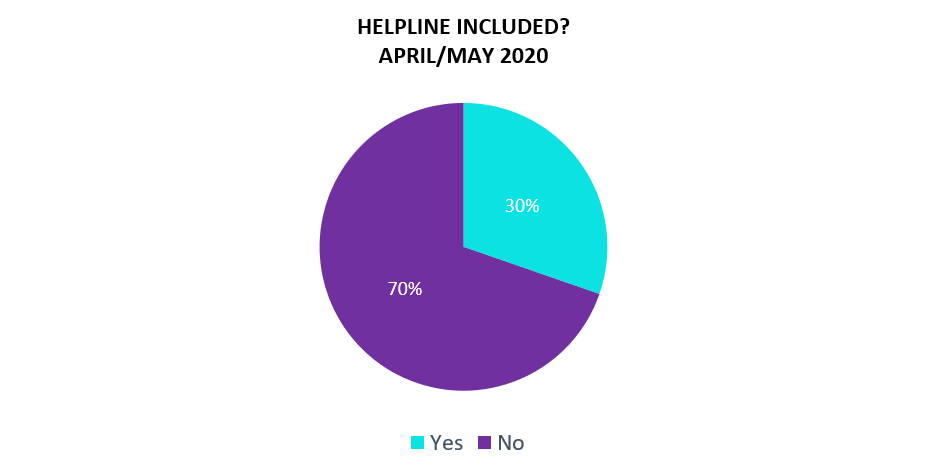
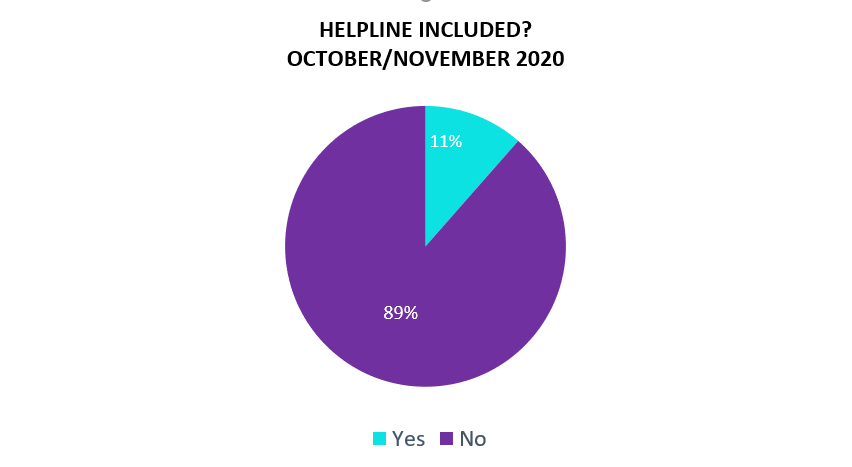
However, as the results show, the overwhelming majority of stories in both periods did not include helplines. This was due to a variety of interesting patterns that emerged during my research.
The scope of the paper impacted the inclusion of helpline information. Of all stories analysed, 18% of national papers included helplines, compared to 34% of local papers. When national papers included helplines, these were often written by the same journalist. One factor that attributed for when local papers did not provide helplines related to the topic of the story, again correlating with the role of individual journalist. A story reporting a court hearing was more likely to be written by a court reporter, who may not deem it important to include helpline information.
In terms of which kind of stories were most likely to give helpline information, the stories most likely to include a helpline were stories associated with Scottish Women’s Aid and related services. The stories that were least likely to include a helpline fell under the categories of criminal justice and perpetrators’ stories.
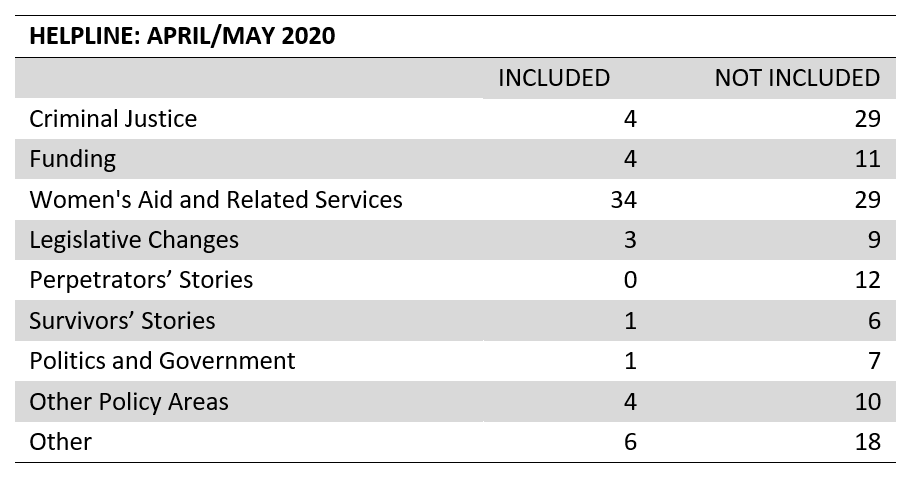
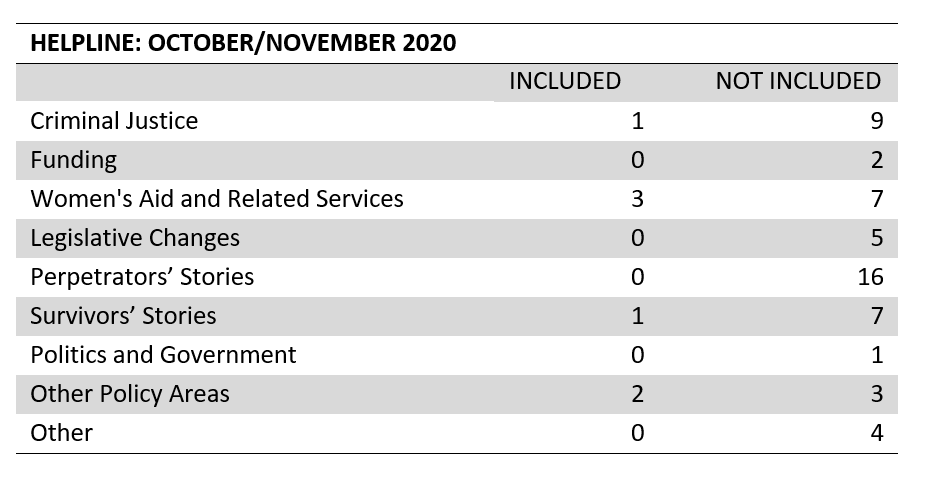
It was also alarming that a common topic within Scottish Women’s Aid related stories in April/May 2020 predicted a surge in domestic abuse cases after lockdown, and quoted Scottish Women’s Aid directly, yet did not provide further information on the services available for women. The results are even more discouraging for October/November 2020, as the majority of Scottish Women’s Aid related stories did not include helplines.
Attention must also be drawn to survivors’ stories. These stories are important in themselves as they place women directly at the centre of the narrative. Survivors’ stories are a powerful factor in encouraging women to seek help if they too are experiencing domestic abuse. However, as my research shows, there was only one survivor story for each period that included helplines, compared to the seven that did not. Survivors’ stories are crucial and could resonate with someone reading who may feel they are in a similar situation. We need to act upon that and have the resources readily available at the reader’s fingertips.
The last area of analysis that has been vital to my research was the differentiation between the national police emergency number and helplines. On various occasions, the only resource included in domestic abuse reports were the national police emergency and non-emergency numbers. Although this is a positive step in encouraging women to seek help, there are also implications of providing the emergency services number rather than the national domestic abuse helpline. For many women, calling the helpline is a means of support and a way to seek advice whilst remaining anonymous, rather than to formally report incidences of domestic abuse. Involving the police can be daunting, and whilst it is understandable that this is the most viable option in an emergency, it’s also crucial for women to be able to contact trained professionals for emotional support. Good reporting practice will include both the emergency services number and the national domestic abuse helpline.
Copying and pasting the details from the Scottish Women’s Aid or Zero Tolerance website takes under 30 seconds, and ultimately it could save someone’s life.
If you feel scared of your partner or ex-partner, or if you are worried about someone you know, get in touch with Scotland’s 24-hour Domestic Abuse and Forced Marriage Helpline on 0800 027 1234 for support and information. You can also email and web chat from www.sdafmh.org.uk. There are translation and interpreting services available.

by womensaidscot17 | Mar 17, 2021 | Uncategorised
“Why should we have to move everywhere and everything because of him?” – Change, Justice, Fairness Report 2015.
In May 2013, in a church hall in Kirkcaldy a group of women came to a meeting held by Scottish Women’s Aid to find out about a participatory research project. The research was to look at women’s experiences of becoming homeless because of domestic abuse – the leading cause of women’s homelessness in Scotland, both then and now. We invited women with lived experience of domestic abuse to volunteer to learn new skills, design and carry out research to identify the issues and find solutions for preventing homelessness, informing policy and improving responses from housing providers.
Over the next two and a half years, a determined and courageous group of women did just that. In church halls and community centres, on most weeks, come rain or shine they worked together as volunteer community researchers to design and carry out a research project supported by staff from Scottish Women’s Aid. They decided the focus of the research, identified what they still needed to know about other women’s experiences and how housing policy and practitioners responded to domestic abuse. And they identified the best ways to get that information – reliably and with integrity. They used their shared understanding of women’s experiences to highlight the key findings, conclusions and recommendations and to co-produce a research report published in December 2015.
As the community researchers said at the time,
“We came together as a group of women from different backgrounds and life experiences and began sharing our stories – we found strong similarities in how we had been treated. We were determined to prevent other women and children in the future from having to live through what happened to us. We had done nothing wrong but were forced to leave our home, either by the perpetrator or by the housing system that expected us and our children to become homeless.”
A key recommendation identified by the researchers was the need for new legislation to protect women and their children’s rights to remain in their home by placing conditions on perpetrators of domestic abuse, including removing them from the home. This legislation would provide the space and opportunity for support to be made available to allow women to consider their future housing options.
This recommendation has now been realised in the Domestic Abuse (Protection) (Scotland) Bill – an outstanding achievement for those community researchers and a great outcome after decades of campaigning from Scotland’s women’s sector to improve housing outcomes for women, children and young people who have experienced domestic abuse. The Bill marks a critical shift in in preventing women’s homelessness by removing and barring the perpetrator from the home and gives social landlords greater control to transfer tenancies to a victim/survivor, upholding women’s rights to remain in her home. The Bill reaches its final stage of scrutiny when it is debated in the Scottish Parliament on Wednesday 17th March and we strongly urge all MSPs to support it.
As one of the community researchers said about the Bill:
“At last women get to remain in their own home, don’t have to relocate to a new area where they don’t know anybody, when at such a difficult time they need their family and friends around them – and men are finally being held accountable for their actions. We once asked as a group, why can’t the perpetrator be removed? Well now it’s here, totally brilliant.”
by womensaidscot17 | Mar 8, 2021 | Uncategorised
Guest post by Emma Duffy, University of Strathclyde.
As part of my degree in MSc Applied Gender Studies at the University of Strathclyde, I have been conducting a research project for Scottish Women’s Aid, mapping the appearance of domestic abuse in Scottish news media. My findings will be shared through a series of blog posts, published on the Scottish Women’s Aid website and this is the first in that series.
Choose to Challenge
With the theme for this year’s International Women’s Day being #ChooseToChallenge, I felt it was the perfect opportunity to kickstart my blog series on the research I have been undertaking for Scottish Women’s Aid. It is important that we continue to challenge the myths around domestic abuse – an issue which overwhelmingly affects women – in Scotland. One way we can #ChooseToChallenge these myths is through responsible media reporting of domestic abuse, which has a significant influence on how domestic abuse is understood by the wider public.
Scotland has witnessed many progressive changes when it comes to domestic abuse. This has included legislative changes, such as the ground-breaking Domestic Abuse (Scotland) Act, which came into force in April 2019, and the Domestic Abuse (Protection) (Scotland) Bill, which is currently being debated in the Scottish Parliament. Yet, when it comes to representation of domestic abuse in the media, it could be argued that reporting is out-dated, unethical and misinformed about such legislations. Furthermore, if the reporting of domestic abuse utilises sensationalised or trivialising language, the media only reinforces the myth that domestic abuse is limited to physical violence.
My research
Over the past few months, I have been conducting a news monitoring project on domestic abuse in the Scottish news media. My search focussed on two key periods six months apart: April/May 2020 and October/November 2020. Although there has been previous reflections on the one-year anniversary of the Domestic Abuse (Scotland) Act, as well as the impact of reporting on violence against women during a global pandemic, my research looks at all coverage of domestic abuse during those two periods. I searched for three key terms on the Nexis database: ‘domestic violence’, ‘domestic abuse’ and ‘coercive control’, which resulted in 188 stories for April/May 2020, and 61 stories for October/November 2020. In line with the Global Media Monitoring Project’s (GMMP) coding guidance, I looked at various aspects of each story including the main topic, the scope of the newspaper, if the story was related to COVID-19 and who was quoted in each story.
The results proved extremely interesting. Whilst there was almost three times the number of stories codes for April/May as October/November, perhaps unsurprisingly the overwhelming majority of these stories were related to COVID-19. As my findings show, 79% of stories coded in April/May were related to COVID-19, compared to 20% in October/November.
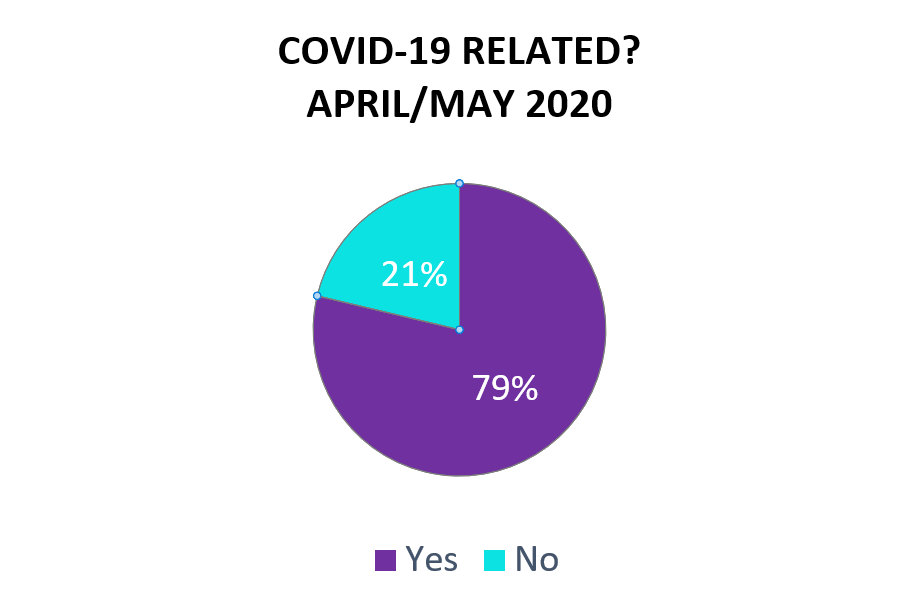
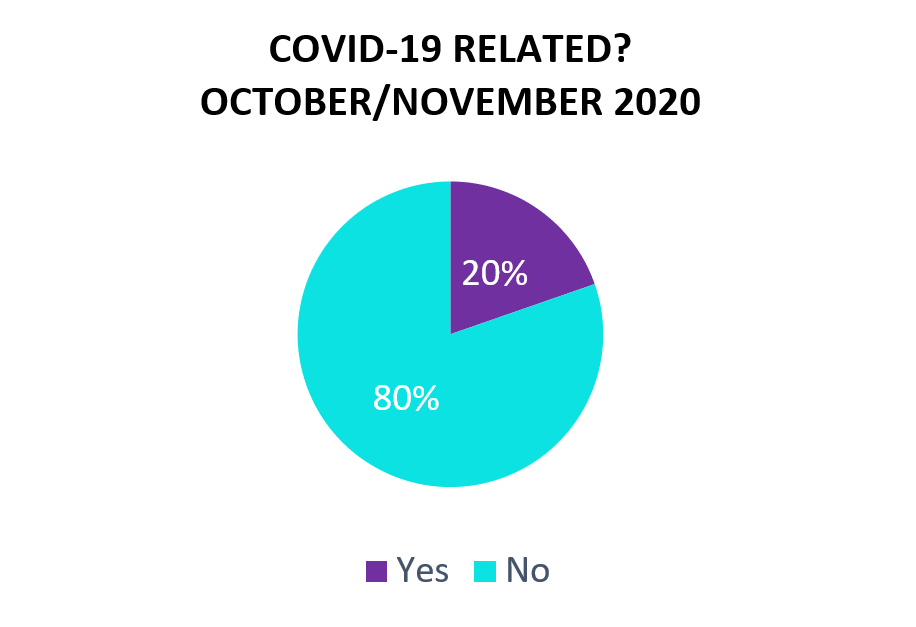
The COVID-19 pandemic, then, determined the coverage of certain topics, especially as the Scottish Women’s Aid press release at the beginning of lockdown accounted for the high percentage of Scottish Women’s Aid related stories in April/May.
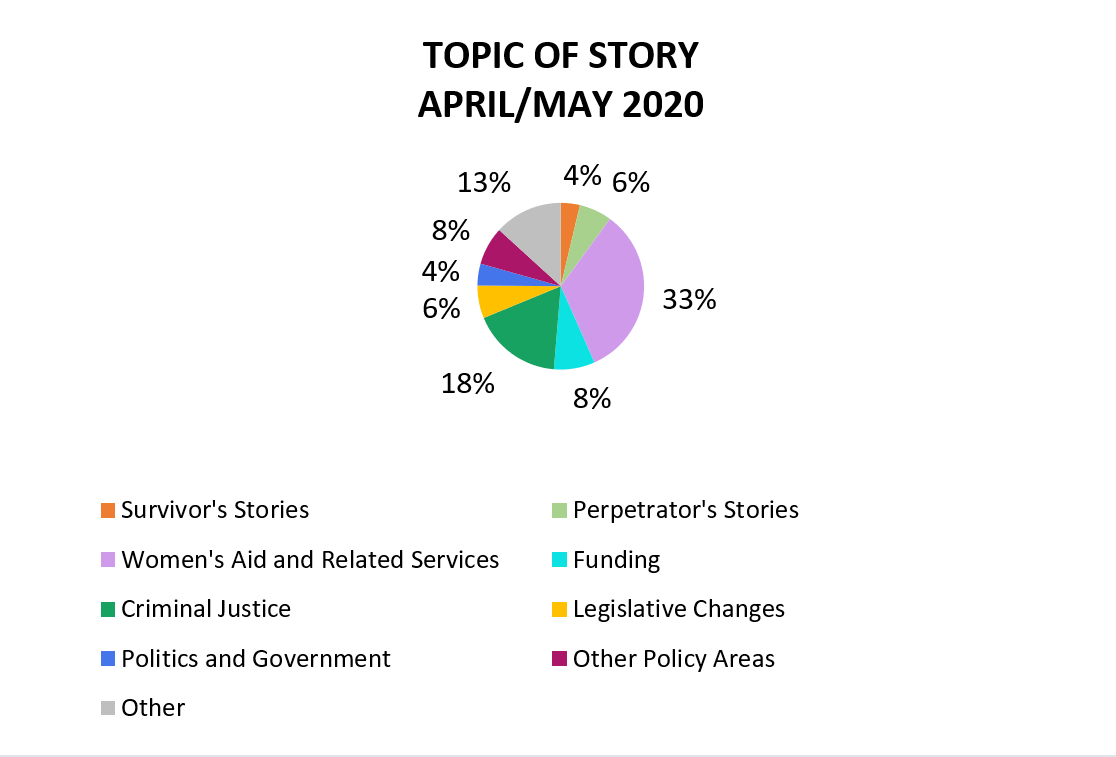
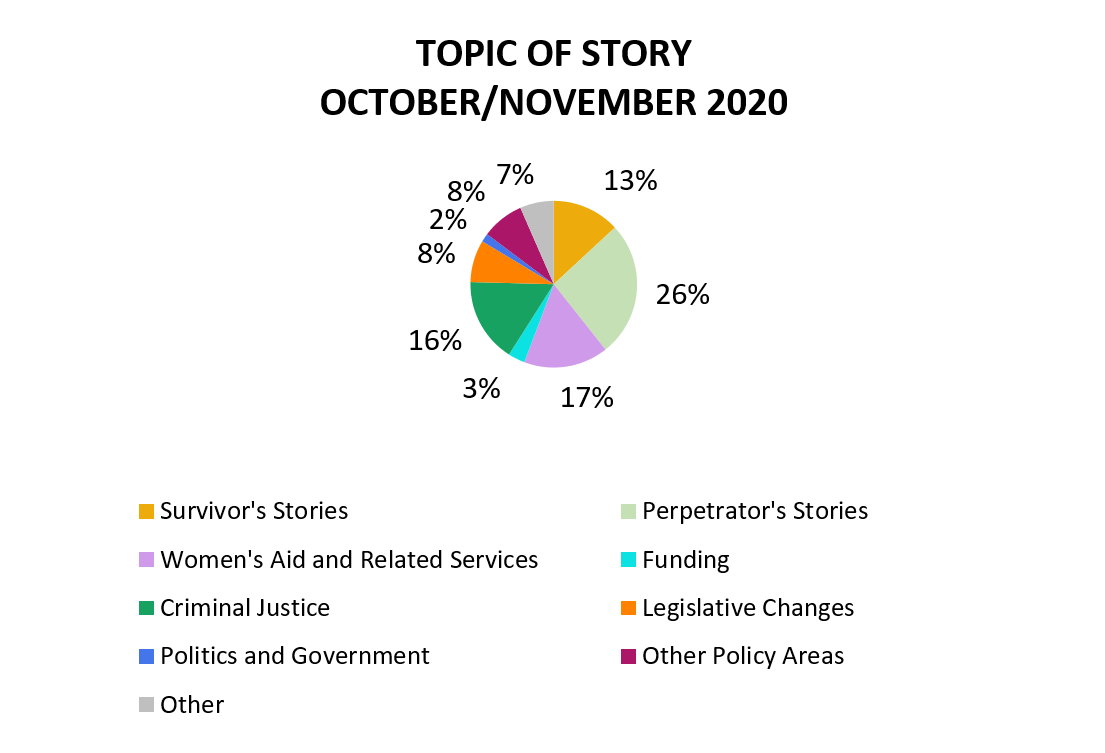
However, despite the high volume of stories relating to Scottish Women’s Aid, there was a shockingly low number of helplines included for women to seek support when required. I was also extremely disappointed by the small number of stories that were devoted to the experience of survivors.
Further analysis showed that women were underrepresented in professional positions quoted in each story. For example, in April/May, there were 36 male police officers quoted, compared to 16 female and 4 unspecified. In October/November, there were 7 male government officials quoted, compared to 1 female. This is reflected in the fact that currently only 46 out of 129 MSPs are female, and that only 30% of police officers in Scotland are women. Although there was a larger number of women quoted under the category ‘other’, this category included local charities that were not Scottish Women’s Aid services, as well as larger organisations such at The National Lottery and Morrisons supermarket. Because I could not include a category for every occupation that I encountered, I prioritised the main categories that will be relevant to my research.
Throughout my next two blog pots, there will be a focus on the use of language in the Scottish news media and how this reflects a shift in the understanding of domestic abuse. By including a more in-depth analysis of patterns and trends that have emerged during my research, I intend to investigate whose stories are being told, and how. But for now, on International Women’s Day, I invite everyone to #ChooseToChallenge the myths around domestic abuse. We must continue to break the misconception that domestic abuse is limited to physical violence and by recognising that risk is heightened by the pandemic, but that abuse is not caused by the pandemic. Not only is doing so crucial in improving the lives of women in Scotland, but also around the world.
Further information about how to improve your understanding of the dynamics of domestic abuse can be accessed via the Scottish Women’s Aid website.
If you feel scared of your partner or ex-partner, or if you are worried about someone you know, get in touch with Scotland’s 24-hour Domestic Abuse and Forced Marriage Helpline on 0800 027 1234 for support and information. You can also email and web chat from www.sdafmh.org.uk. There are translation and interpreting services available.

